JUICE’s September 2026 Earth Flyby: A Free Boost Toward Jupiter
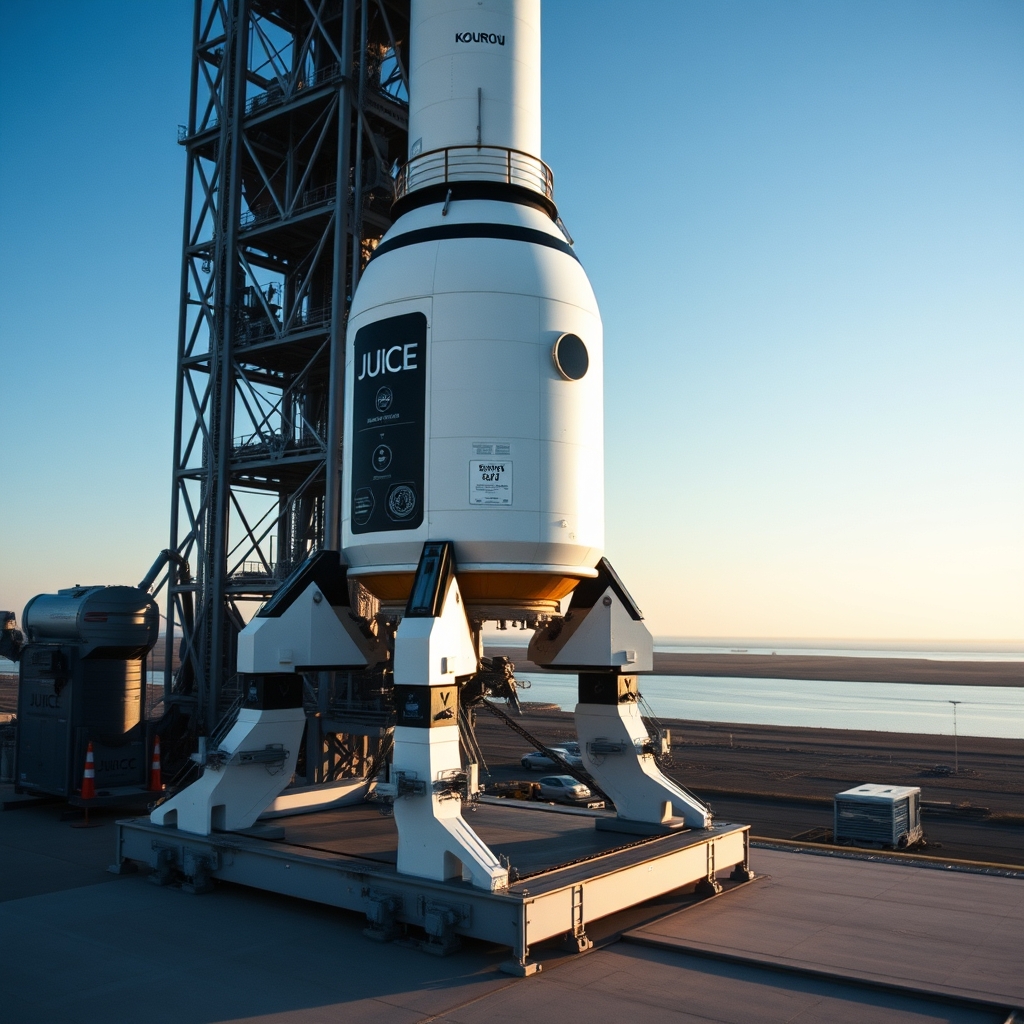
JUICE, ESA’s Jupiter Icy Moons Explorer, will glide past Earth on 28 September 2026, coming within 8 640 km of the planet. The maneuver will bend its path by about 20 degrees and add roughly 3.5 km s⁻¹ to its speed, keeping the spacecraft on track for a Jupiter encounter in July 2031.
The 2026 Earth swing‑by: what will happen
According to ESA Space Science, the spacecraft will reach its closest approach over the Indian Ocean at 13:45 CEST (11:45 UTC). From 21:24 CEST on 27 September until 06:03 CEST on 28 September, JUICE will travel through Earth’s shadow and run on battery power alone. To preserve the batteries, only the most critical instrument observations will be taken during that dark interval.
The navigation team has been preparing since 17 August. Six correction windows – four weeks, two weeks, one week and three days before closest approach – will be used to fine‑tune the trajectory. A final emergency burn is scheduled for 08:00 CEST on the day of the flyby, but it will only be fired if a navigation error threatens the maneuver.
Gravity assists versus a straight shot
Getting a spacecraft to the outer Solar System without a huge launch vehicle is impossible with today’s chemical rockets. A direct launch from Earth to Jupiter would need a massive amount of propellant for two reasons: first, to accelerate the spacecraft to escape‑velocity speeds, and second, to brake enough to be captured by Jupiter’s gravity instead of slingshotting past it.
A gravity assist uses the motion of a planet to change a spacecraft’s velocity without burning fuel. When JUICE approaches a planet, the planet’s gravity pulls it in, and as the spacecraft leaves, it retains a portion of the planet’s orbital speed around the Sun. The net effect is a change in the spacecraft’s heliocentric (Sun‑centered) velocity vector. By chaining assists – a lunar‑Earth “braking” flyby, a Venus swing‑by, and now two more Earth flybys – JUICE gains the energy it needs while keeping its fuel reserves for the long cruise and for orbit insertion around Jupiter and Ganymede.
| Assist | Main effect on JUICE’s speed | Approximate Δv* |
|---|---|---|
| Lunar‑Earth (2024) | Braking maneuver, reduced speed to set up Venus flyby | – (braking) |
| Venus (2024) | Adds modest speed, reshapes orbit | – (not quantified) |
| Earth (2026) | Deflection ~20°, speed increase ~3.5 km s⁻¹ | +3.5 km s⁻¹ |
| Earth (2029) | Final boost onto Jupiter‑intercept trajectory | – (planned) |
*Δv values are taken directly from the ESA release where provided; other assists are described qualitatively.
Science opportunities while JUICE swings past Earth
Even though the primary goal is a trajectory correction, the flyby doubles as a science campaign. Between 23 September and 3 October, all ten of JUICE’s instruments will be switched on to collect data on Earth, the Moon and the spacecraft’s own environment.
One unique aspect is the passage through Earth’s magnetotail – the elongated region of the planet’s magnetic field that trails away from the Sun. The magnetotail is filled with charged particles from the solar wind, and JUICE’s magnetometer will record magnetic field variations that can later be compared with data from the ESA‑Chinese SMILE mission.
The navigation camera will point at the lunar horizon to test a new optical‑navigation technique, while the two monitoring cameras will snap images throughout the encounter. Those pictures will be posted on ESA’s social channels, giving the public a front‑row view of the event.
What the maneuver really changes – trade‑offs and what to watch next
The 3.5 km s⁻¹ speed gain is not a free lunch; it comes at the cost of precise timing and tight navigation tolerances. The spacecraft must arrive at the correct angle, otherwise the assist could send JUICE on a trajectory that misses the planned Jupiter intercept by millions of kilometres. The six correction windows and the optional emergency burn illustrate how narrow the error budget is.
The trade‑off is clear: by saving the thousands of kilograms of propellant that a direct launch would need, JUICE retains enough fuel to perform orbit insertion around Jupiter in 2031 and to conduct 35 close flybys of Ganymede, Callisto and Europa before moving to a dedicated Ganymede orbit in 2034. The downside is a longer cruise – eight years from launch to Jupiter – and a dependence on planetary alignments that dictate when the assists can occur.
Who should care? Mission planners at other agencies will watch the precision of the Earth assist closely, because the same technique is planned for NASA’s Europa Clipper and the upcoming Dragonfly mission to Titan. Any deviation that requires a larger-than‑planned correction burn would raise the fuel margin for those missions.
What to monitor after the flyby? The key data sets are:
- The actual Δv achieved, compared with the predicted 3.5 km s⁻¹.
- The post‑flyby trajectory error – a few metres per second can translate into large positional offsets years later.
- Magnetotail measurements, which will feed into space‑weather models and the SMILE mission’s comparative studies.
Looking ahead: Jupiter, its icy moons, and the science legacy
If the September 2026 assist goes as planned, JUICE will head toward a second Earth flyby in January 2029, which will place it on a direct path to Jupiter for a July 2031 encounter. Once in the Jovian system, the spacecraft will spend three years orbiting the planet, performing 35 close flybys of Ganymede, Callisto and Europa. The mission’s ultimate goal is to characterise these moons as potential habitats for life, using a suite of remote‑sensing, geophysical and in‑situ instruments.
The long cruise gives scientists a rare chance to test instruments on real planetary bodies – Earth and the Moon – before the grand tour of the icy worlds. Calibration data gathered now will improve the accuracy of measurements taken at Jupiter and its moons, sharpening our picture of how giant‑planet systems work across the galaxy.
How you can follow and contribute today
- If you have a telescope of at least 8‑inch aperture or good binoculars, point it at the Indian Ocean region around 13:45 CEST on 28 September and try to spot JUICE as a moving point of light.
- Subscribe to ESA’s @science.esa.int on Bluesky or follow the ESA website for daily image releases from the monitoring cameras.
- Amateur radio operators can listen for telemetry bursts during the flyby; details will be posted on the ESA “Trajectory data” page linked in the release.
By keeping an eye on the mission’s updates, you’ll be part of a community that watches a spacecraft use planetary gravity as a cosmic slingshot, a technique that will shape deep‑space travel for decades to come.