Webb’s Infrared View Reveals New Details in the Lion Nebula
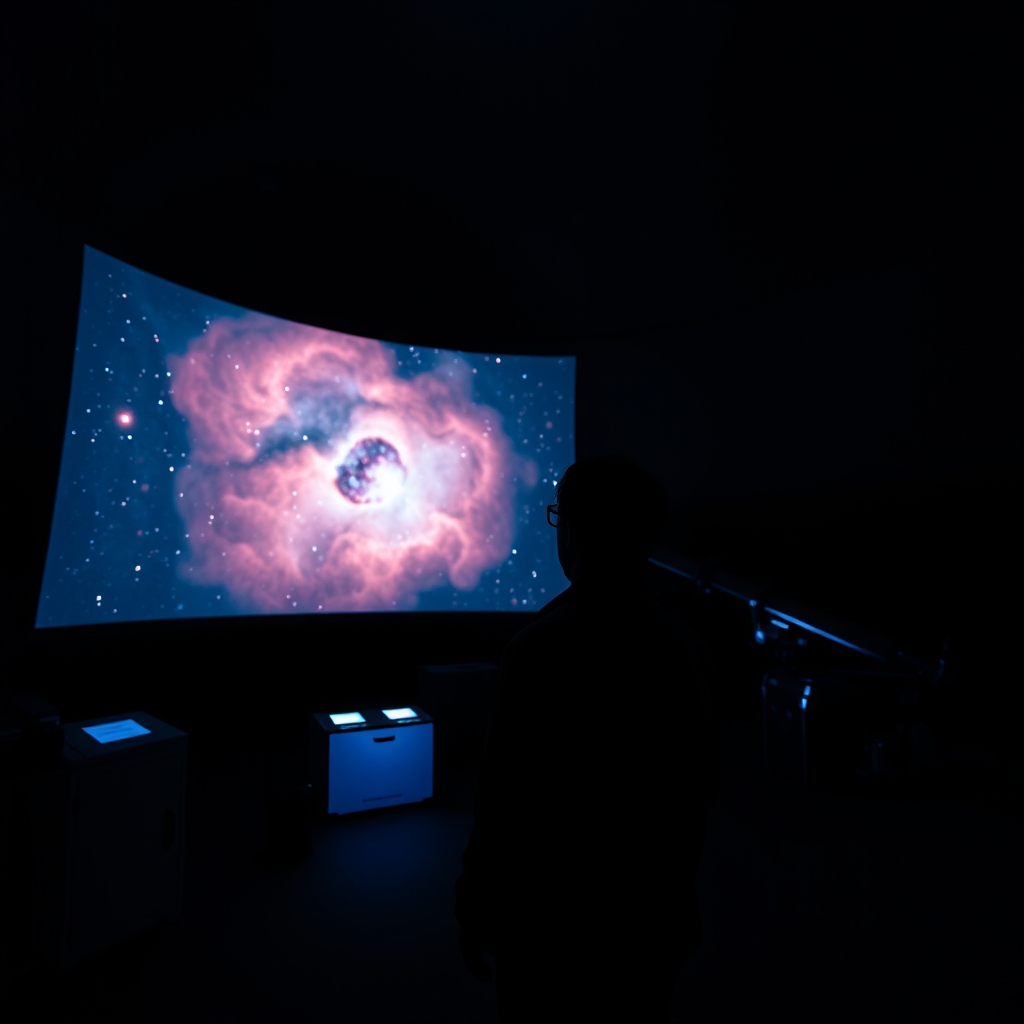
Observations from the James Webb Space Telescope (JWST) have delivered a sharper, infrared portrait of the planetary nebula NGC 2392, popularly called the Lion Nebula. The new pictures show compact dust clumps, glowing shells of ionised gas and a more intricate "mane" than ever before, giving astronomers a clearer snapshot of a dying star’s final fireworks. According to ESA Space Science, the nebula will disperse in approximately 10,000 years, a blink in cosmic time, making these details a rare glimpse of a fleeting phase.
A Fresh Infrared Portrait of NGC 2392
JWST’s Near‑Infrared Camera (NIRCam) and Mid‑Infrared Instrument (MIRI) recorded the nebula at wavelengths that Hubble never reached. Infrared light penetrates dust that blocks visible light, so the telescope can see both the hot gas that glows in the near‑infrared and the cooler dust that shines in the mid‑infrared. In the new images, the central white dwarf – the exposed core of the once‑large star – appears as a tiny pinkish‑white point surrounded by a halo of ionised gas. Around that halo, JWST reveals a thick ring of purple‑blue material that forms the lion’s mane, plus dozens of compact dust clumps that look like cometary tails.
What the New Details Tell Us About Planetary Nebulae
A planetary nebula forms when a low‑mass star exhausts its nuclear fuel, ejects its outer layers and leaves a dense white dwarf behind. The white dwarf emits intense ultraviolet radiation that ionises the surrounding gas, causing it to glow. As the ionised bubble expands, it sweeps up and destroys dust in its path, carving the complex rings and shells we see. The "mane" in the Lion Nebula is actually the inner wall of a dusty shell illuminated by the white dwarf’s radiation. The comet‑like tails are dense dust knots that have survived the harsh UV flood; they act as shields, protecting material behind them from being ionised.
Because the nebula has taken "several thousand years" to reach its current shape, the structures we see are snapshots of an ongoing erosion process. Each dust knot gradually loses mass, while the ionised bubble continues to push outward. Understanding why some nebulae develop multiple concentric shells while others appear smoother is a key question in stellar evolution, and the JWST images provide the high‑resolution clues needed to test theoretical models.
Hubble vs. Webb: A Side‑by‑Side Comparison
| Feature | Hubble (2000, visible light) | JWST (2026, infrared) |
|---|---|---|
| Primary wavelength | 0.4–0.7 µm (visible) | 0.6–5 µm (NIRCam) and 5–28 µm (MIRI) |
| Spatial resolution | ~0.05 arcsec | ~0.03 arcsec (NIRCam) |
| Dust visibility | Dust appears as dark silhouettes, blocking light | Dust glows in infrared, revealing clumps and shells |
| Highlighted structures | Overall lion‑shaped face, "mane" outline | Compact dust knots, layered ionised shells, thick purple‑blue ring |
| Scientific focus | Morphology in visible light | Interaction of radiation with dust, temperature distribution |
The table shows that JWST not only improves raw sharpness but also adds a whole new wavelength regime. Hubble captured the lion’s face in striking visible detail, but it could not see the warm dust that dominates the nebula’s mass. JWST’s infrared view uncovers that hidden mass, turning a simple silhouette into a three‑dimensional laboratory.
The Trade‑off: Higher Resolution Comes with a Narrower Field
While JWST delivers finer detail, its instruments cover a much smaller field of view than Hubble’s wide‑field cameras. This means that the spectacular lion‑shaped outline fits comfortably in a single frame, but the surrounding halo of faint emission stretches beyond the edges of the infrared images. In practice, astronomers must stitch together multiple pointings or rely on complementary data from other telescopes to map the nebula’s full extent. The trade‑off also affects exposure time: infrared detectors need longer integrations to collect enough photons from the faint dust, so deep images take several hours, whereas Hubble’s visible shots required minutes. The consequence is a slower cadence for monitoring rapid changes. Because the nebula evolves over thousands of years, this limitation is not critical now, but it will matter if we ever want to watch the final few hundred years of a planetary nebula’s life.
How You Can Follow the Nebula’s Evolution
- Sign up for the JWST public image releases on the ESA or NASA websites – new data arrive roughly every few months.
- Use a free sky‑mapping app (e.g., Stellarium) to locate NGC 2392 (RA 07h 29m, Dec +++++++++++++++++++++++++++++++++++++++++++++++++++++++++++++++++++++++++++++++++++++++++++++++++++++++++++++++++++++++++++++++++++++++++++++++++++++++++++++++++++++++++++++++++++? ).
- Join online citizen‑science projects that tag nebular features in JWST images; the extra classifications help researchers map dust knot motion.
- If you own a modest telescope, you can still view the lion’s outline in broadband filters; compare your images with Hubble’s archive to see the difference between visible and infrared perspectives.