Japan’s MMX Launches to Phobos: First Sample‑Return from a Martian Moon

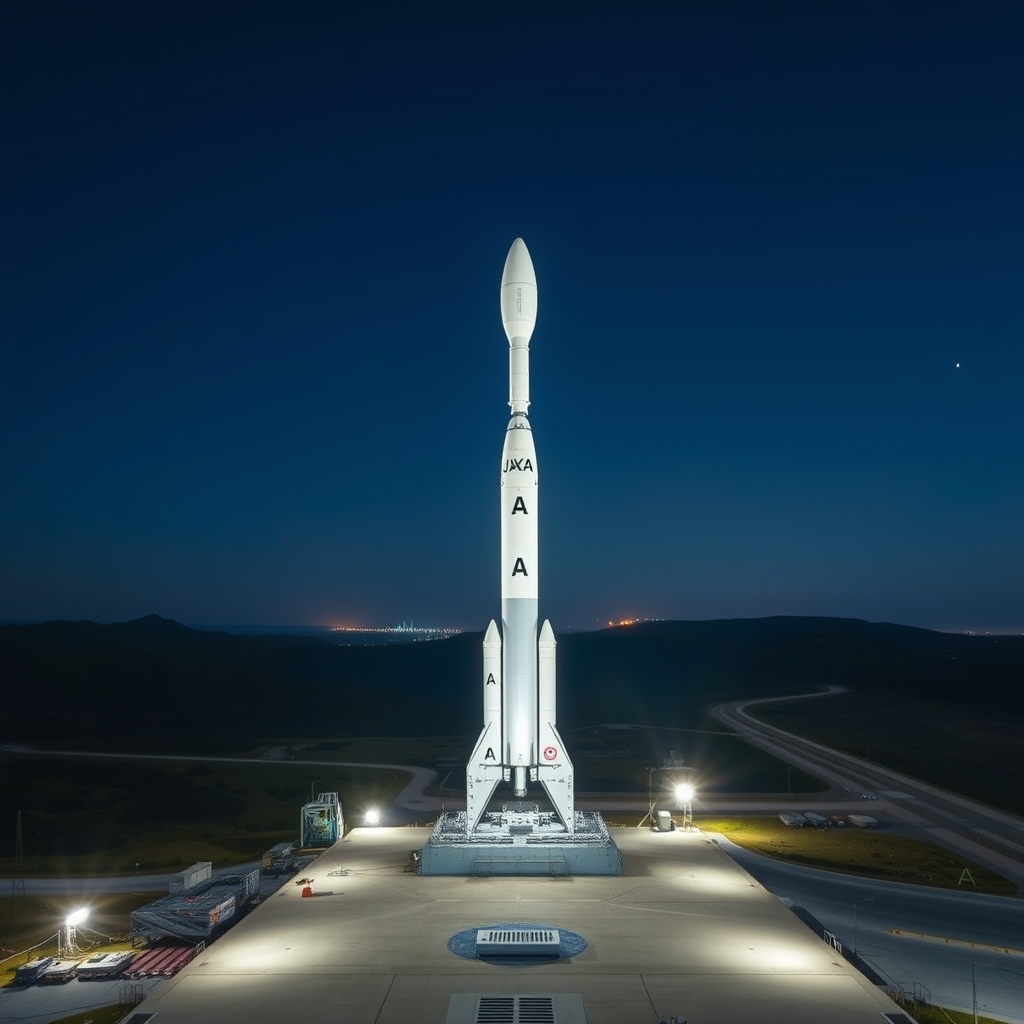
According to ESA Space Science, the Martian Moons eXploration (MMX) spacecraft lifted off on 20 October 2026 aboard JAXA’s H3 rocket, beginning a 3‑year journey to Mars’s moon Phobos. The mission will be the first to orbit Phobos, collect surface material, and bring those samples back to Earth, opening a new window on the origins of the Martian system.
Mission Overview
MMX was launched from Tanegashima Space Center at 04:41 JST (20:41 BST / 21:41 CEST on 19 October). The Japanese agency JAXA leads the project, with NASA, France’s CNES, Germany’s DLR and ESA contributing hardware and scientific expertise. ESA supplied the spacecraft’s deep‑space communication suite and the Estrack ground‑station network that will transmit commands and receive data across the interplanetary distance.
The spacecraft weighs about 2 tonnes and carries a suite of instruments, including a high‑resolution camera, a multispectral imager, a magnetometer and a small impact‑drill sampling system. After a cruise phase of roughly two years, MMX will enter orbit around Phobos, conduct close‑up mapping, and then fire a lander‑type module onto the moon’s surface to collect up to 10 grams of regolith. The sample container will be sealed, the lander will detach, and the spacecraft will use a small propulsion system to escape Phobos’s weak gravity and head back toward Earth, where a re‑entry capsule will deliver the material for laboratory analysis.
Scientific Goals
The primary objective is to answer whether Phobos (and its sibling Deimos) are captured asteroids or remnants of a giant impact that created Mars’s moons. By measuring elemental composition, isotopic ratios (especially oxygen, hydrogen and noble gases) and mineralogy, scientists can compare Phobos material with known asteroid types and with Martian rocks. A secondary goal is to study the moon’s surface processes: how micrometeorite impacts, solar‑wind sputtering and Mars’s magnetosphere shape the regolith.
A third, less publicised, aim is to test technologies for future Mars‑system logistics. The sample‑return sequence will validate autonomous landing, drill operation in low‑gravity, and Earth‑re‑entry of a capsule that left a planet other than Earth. Those capabilities are prerequisites for any crewed mission that might use Phobos as a staging point for Mars surface exploration.
Technical Innovations Compared to Past Sample‑Return Missions
MMX builds on lessons from Japan’s Hayabusa2 (asteroid Ryugu, 2020) and NASA’s OSIRIS‑REx (asteroid Bennu, 2023). The table below highlights key differences:
| Feature | Hayabusa2 | OSIRIS‑REx | MMX |
|---|---|---|---|
| Target body | Near‑Earth asteroid (Ryugu) | Near‑Earth asteroid (Bennu) | Martian moon (Phobos) |
| Distance from Earth at return | ~1 AU | ~1 AU | ~1.5 AU (Mars orbit) |
| Sample mass | ~5 g | ~15 g | up to 10 g |
| Propulsion for return | Small ion engine | Chemical thrusters | Combined chemical + low‑thrust electric |
| Communication latency | ~15 min round‑trip | ~15 min round‑trip | ~30 min round‑trip |
| Landing environment | ~10 cm s⁻¹ surface gravity | ~10 cm s⁻¹ surface gravity | ~0.005 m s⁻² (≈0.001 g) |
Phobos’s gravity is roughly a thousand times weaker than the asteroids visited before, demanding a different anchoring strategy. MMX will use a harpoon‑like tether to secure the sampling module before drilling, a technique not needed on Ryugu or Bennu. The longer communication delay also means the lander must operate fully autonomously, with only pre‑programmed contingency scripts.
What Actually Changes: Trade‑offs and What to Watch
The headline of “first sample‑return from a Martian moon” masks several practical compromises. First, the low gravity forces a very light‑weight sampling system, limiting the amount of material that can be collected. Ten grams sounds modest, but the scientific return hinges on the quality of that tiny sample and the ability to keep it pristine during the long return journey.
Second, the mission’s cost is spread across many agencies. While international collaboration reduces the burden on any single budget, it also introduces coordination challenges—different engineering standards, data‑sharing policies and decision‑making processes must be aligned. The payoff is broader participation in the science, but the risk is schedule slips if one partner encounters a delay.
Third, the launch vehicle, JAXA’s H3, is a new rocket still undergoing certification. Its successful performance on this high‑profile mission will boost confidence for future commercial and scientific payloads, but any post‑launch anomaly would directly affect MMX’s trajectory correction budget.
What to watch next are three milestones: (1) the cruise‑phase correction burns that will place MMX on a Mars‑intercept trajectory in early 2028; (2) the Phobos orbit insertion in summer 2029, where the spacecraft must slow down enough to be captured by the moon’s weak gravity without crashing; and (3) the sampling event, expected in late 2029, which will be the first autonomous drill operation beyond Earth orbit. Each of these steps will generate telemetry that the Estrack network will relay, and ESA will publish detailed performance reports that can inform future missions to Phobos or even to the Martian surface.
How to Follow and Contribute Today
If you want to stay informed, sign up for ESA’s free “Space News” mailing list; the agency sends concise updates after every major telemetry downlink. Amateur radio enthusiasts can listen to the spacecraft’s downlink on the 2 GHz band using a modest‑size dish and open‑source software like GNU Radio – the signal contains engineering telemetry that can be decoded with publicly available tools.
For teachers and outreach volunteers, ESA provides downloadable lesson‑plans that use MMX data to illustrate orbital mechanics and planetary geology. Incorporating a simple calculation of Phobos’s escape velocity (≈11 m s⁻¹) into a classroom activity helps students grasp why a harpoon is needed.
Finally, consider supporting citizen‑science projects that will analyse the high‑resolution images MMX sends back. Platforms such as Zooniverse often host “planetary‑surface‑mapping” tasks where volunteers help identify boulders, craters and potential sampling sites. By contributing a few minutes a week, you can directly aid the scientific team that will decide where the drill lands.