Euclid spots its first new comet, C/2026 S1 (Euclid)
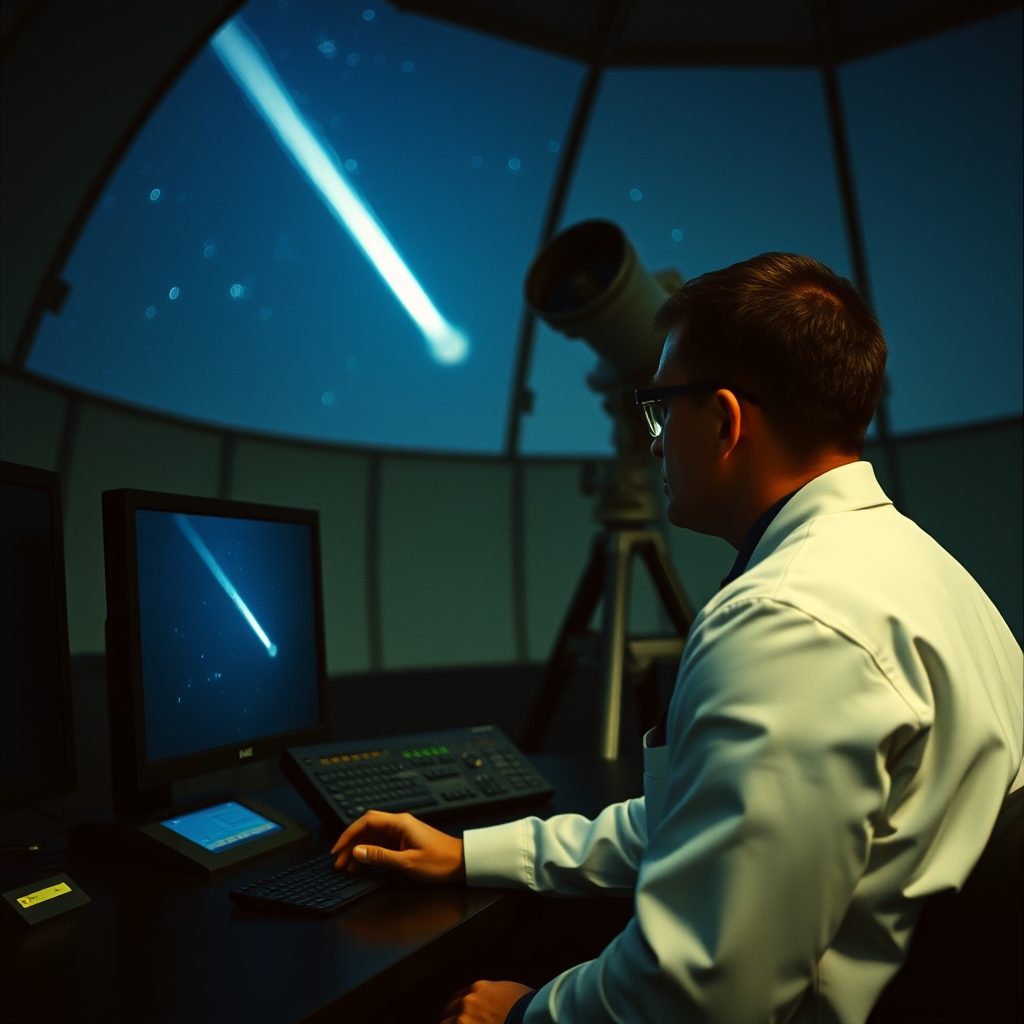
According to ESA Space Science, the Euclid space telescope captured its first previously unknown comet, C/2026 S1 (Euclid), in images taken between 16 and 24 September 2026. The find matters because a mission built to map distant galaxies can also flag fast‑moving Solar System objects, opening a new avenue for early comet alerts and coordination with ESA’s future Comet Interceptor.
A streak in the data – how the comet was identified
Mikko Pöntinen, a PhD student at the University of Helsinki, ran his own moving‑object detection software on Euclid’s deep‑field images. The program highlighted a linear “streak” that appeared across several exposures – the hallmark of a fast‑moving body. By extrapolating the streak’s trajectory, Pöntinen linked it to the same object in five separate image sets, giving a total of 16 exposures. The object displayed a fuzzy halo, indicating an active coma of dust and gas, which is characteristic of a comet.
Cross‑checking against existing comet and asteroid catalogues yielded no match, so the team reported the detection to the International Astronomical Union’s Minor Planet Center (MPC). The MPC confirmed the object as a comet on 8 October and assigned the designation C/2026 S1 (Euclid). At the time of discovery the comet lay roughly 1.3 billion km from Earth – a distance comparable to the region between Jupiter and Saturn – and its orbit arches well above the ecliptic plane, implying a period of several thousand years.
Euclid’s primary role: precision mapping of the distant universe
Euclid was designed for a six‑year survey of the large‑scale structure of the cosmos. Its “step‑and‑stare” strategy tiles the sky once, taking deep, steady exposures to measure the shapes and motions of billions of galaxies out to about 10 billion light‑years. To minimise background glare, Euclid deliberately avoids the dense asteroid and comet belt that lies along the Solar System’s plane. This avoidance reduces stray light that would otherwise compromise the faint galaxy signals needed to infer the influence of dark matter and dark energy.
Because the telescope visits each sky patch only once, it cannot be repointed at will to chase moving targets. Consequently, any Solar System object that happens to cross Euclid’s field of view appears as a fleeting streak, and its detection relies on automated software and rapid validation.
The hidden trade‑off: comet hunting versus cosmology goals
What actually changes when a cosmology mission like Euclid starts flagging comets? The primary mission timeline remains untouched – Euclid still completes its six‑year galaxy survey. The trade‑off is operational: a small fraction of data‑processing resources must be allocated to moving‑object detection and to generating alerts for the MPC. This diversion is modest because comets are rare in Euclid’s survey footprint; the team estimates “very few comets are expected to be discovered.”
The benefit is a proof‑of‑concept for rapid coordination between a deep‑sky observatory and a dedicated comet mission. Even though C/2026 S1 (Euclid) is not a viable target for the upcoming Comet Interceptor, the alert pipeline demonstrated that Euclid can deliver a comet’s sky position while it is still far from the Sun, giving mission planners a larger window for trajectory planning. The hidden catch is that Euclid’s avoidance of the ecliptic plane and its single‑visit cadence limit the number of future detections, so the contribution will remain opportunistic rather than systematic.
Who should care? Planetary scientists gain an extra early‑warning sensor; astronomers using Euclid’s galaxy data benefit from cleaner images once moving‑object trails are masked; and ESA gains experience in cross‑mission data sharing. General observers gain no direct advantage, but the discovery highlights the interconnectedness of space science.
Euclid: galaxy survey vs. comet detection
| Feature | Primary Galaxy Survey | Opportunistic Comet Detection |
|---|---|---|
| Sky coverage strategy | Single visit per field (step‑and‑stare) | Relies on chance alignment with moving objects |
| Target region | Avoids ecliptic plane to reduce dust glare | Occasionally sweeps across high‑inclination comet paths |
| Data processing focus | Shape and redshift measurement of billions of galaxies | Moving‑object detection software flagging streaks |
| Resource impact | Core mission science; no interruption | Minor CPU allocation; generates alerts for MPC |
| Expected yield | Hundreds of millions of galaxy measurements | Very few new comets over six‑year mission |
Practical takeaways for the Solar System community
- Monitor the MPC’s daily circulars for alerts originating from Euclid; the pipeline is now active and could flag additional comets before they brighten.
- If you operate a ground‑based telescope, schedule follow‑up imaging within a few weeks of an Euclid alert to refine the orbit and assess activity levels.
- Researchers interested in comet composition should request Euclid’s calibrated images through the Euclid Science Archive – the data are already public after the standard proprietary period.
- For those planning future missions like Comet Interceptor, keep Euclid’s alert latency in mind: detections are confirmed within days, offering a potentially usable lead time for trajectory adjustments.