ESA and ATMOS finish concept study for Phoenix 3, Europe’s reusable micro‑gravity return vehicle
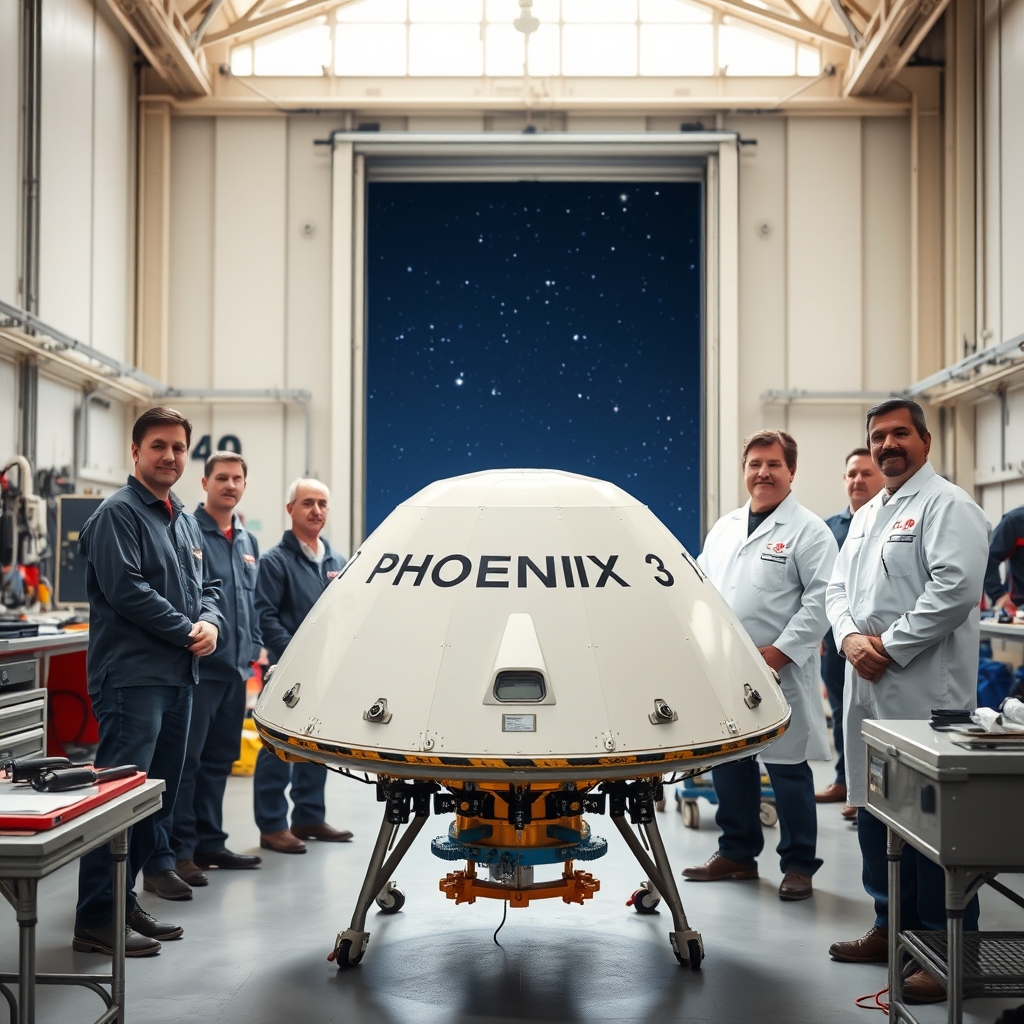
According to ESA Space Engineering & Technology, engineers from the European Space Agency (ESA) and industry partners have completed an intensive concept study for Phoenix 3, a reusable spacecraft designed to fly experiments in microgravity and return them safely to Earth.
Phoenix 3 is envisioned as a fully European orbital return vehicle that would launch a payload, stay in low Earth orbit for a few months up to a year, de‑orbit, survive atmospheric entry, and be recovered for refurbishment. The study was carried out in ESA’s Concurrent Design Facility (CDF) – a collaborative environment where experts from many disciplines work together on a single computer network to assess complex designs in weeks instead of months.
Mission profile and key hardware
The reference scenario places Phoenix 3 in a 350‑km circular orbit, the typical altitude for many Earth‑observation and micro‑gravity platforms. After a mission length of several months to one year, the vehicle would perform a controlled de‑orbit burn, then use an inflatable atmospheric decelerator (IAD) to slow down before splashing down. The IAD is a thin‑walled, gas‑filled structure that expands after launch, increasing the vehicle’s drag area and reducing peak heating during re‑entry.
The spacecraft concept includes:
- A service module that supplies power and propulsion for on‑orbit operations and the de‑orbit burn.
- A pressurised cabin that recreates an Earth‑like atmosphere and can accommodate more than 1 000 kg of scientific or commercial payloads.
- The IAD, which is central to ATMOS’s approach and is being flight‑tested across the Phoenix family.
How Phoenix 3 differs from existing return vehicles
| Feature | Phoenix 3 (study) | Typical European return capsule (e.g., previous ESA cargo concepts) |
|---|---|---|
| Reusability | Designed for multiple flights with refurbishment after each splash‑down | Mostly single‑use or limited‑reuse, requiring new hardware for each mission |
| Payload capacity | >1 000 kg in pressurised cabin | Often below 500 kg for comparable class |
| Deceleration method | Inflatable Atmospheric Decelerator (IAD) | Rigid heat‑shield or ablative tiles |
| Orbit altitude | ~350 km low‑Earth orbit | Similar, but many concepts target higher orbits for specific missions |
| Turn‑around time | Targeted at months, limited by refurbishment cycle | Varies, but generally longer due to extensive hardware replacement |
The table highlights that Phoenix 3 aims to combine a larger usable volume with a reusable deceleration system, a combination not yet common among European return vehicles.
What the study uncovered – trade‑offs that need work
The CDF team identified several design drivers that will shape the next phase (Phase A). The biggest trade‑offs involve:
- Aerodynamics vs. stability – An inflated decelerator provides high drag but can be sensitive to wind gusts and asymmetries during re‑entry. Optimising shape and material stiffness will be crucial to keep the vehicle on a predictable path.
- Thermal protection vs. mass – Inflatable structures reduce the mass of a traditional heat‑shield, but they still need a thermal layer that can survive peak heating without adding excessive weight.
- Guidance accuracy vs. refurbishment cost – Higher landing accuracy reduces the need for extensive recovery logistics, yet achieving that precision may require more sophisticated guidance software and sensors, which in turn raise development costs.
These points are not yet resolved; Phase A will focus on detailed modelling of entry dynamics, refinement of the IAD’s inflation sequence, and validation of the service module’s propulsion system.
Why this matters for European space industry
Reusable return capability directly addresses two strategic goals for Europe. First, it offers a path to lower the per‑mission cost of micro‑gravity research by spreading launch and recovery expenses over multiple flights. Second, it aligns with ESA’s sustainability agenda: a vehicle that can be refurbished reduces orbital debris and the environmental footprint of launch activities.
For commercial customers, the ability to launch payloads with “late access” (near‑launch integration) and retrieve them for “early access” (quick post‑flight analysis) could open new business models in materials science and pharmaceutical research, where time‑critical experiments benefit from rapid turnaround.
The hidden catch – where the promise meets practical risk
The most significant unspoken risk is the reliance on the inflatable decelerator. While flight‑tested on earlier Phoenix prototypes, scaling the IAD to handle a 1 000 kg cabin at entry speeds of roughly 7.8 km/s introduces structural and thermal uncertainties that have not yet been demonstrated in a full‑scale flight. If the IAD fails to deploy correctly, the vehicle could experience uncontrolled heating and loss of trajectory control, turning a reusable concept into a one‑off loss.
Moreover, the refurbishment cycle assumes a streamlined ground‑operations process. In practice, inspecting and certifying an inflatable structure after each splash‑down may require specialized facilities and procedures that are not yet standard in Europe. The cost and time of such processes could erode the anticipated savings from reuse.
What to watch next – milestones and decision points
- Phase A completion (mid‑2025) – Detailed design studies, entry‑simulation results, and a refined mass budget will be delivered. Success here determines whether the project moves to a hardware‑development phase.
- Inflatable decelerator flight test (late‑2025) – A dedicated sub‑orbital flight of the IAD will provide real‑world data on deployment dynamics and thermal performance.
- Industrial partnership announcements – ESA’s Third Party Activity initiative invites additional European firms to contribute components. New partners could indicate confidence in the business case.
- Regulatory clearance for splash‑down recovery – Securing permissions for sea‑based recovery zones in the Atlantic or Mediterranean will be essential for operational planning.
Stakeholders should monitor ESA press releases and the CDF’s technical briefings for updates on these items.
Practical steps for interested parties today
- Researchers: Begin drafting experiment proposals that fit a 1 000 kg pressurised cabin and specify required on‑orbit power and communication needs. Early engagement with ATMOS can shape payload interfaces.
- Companies: Assess whether you have capabilities in inflatable structures, thermal‑protection materials, or refurbishment services that could be offered to the Phoenix 3 supply chain.
- Policy makers: Review national space‑sustainability strategies to ensure they accommodate reusable return vehicles, potentially allocating funding for the necessary ground‑support infrastructure.
By aligning research plans, industrial capabilities, and regulatory frameworks now, Europe can accelerate the transition from a concept study to an operational reusable spacecraft.