European Lunar Crane Ready to Lighten Argonaut Landers’ Load
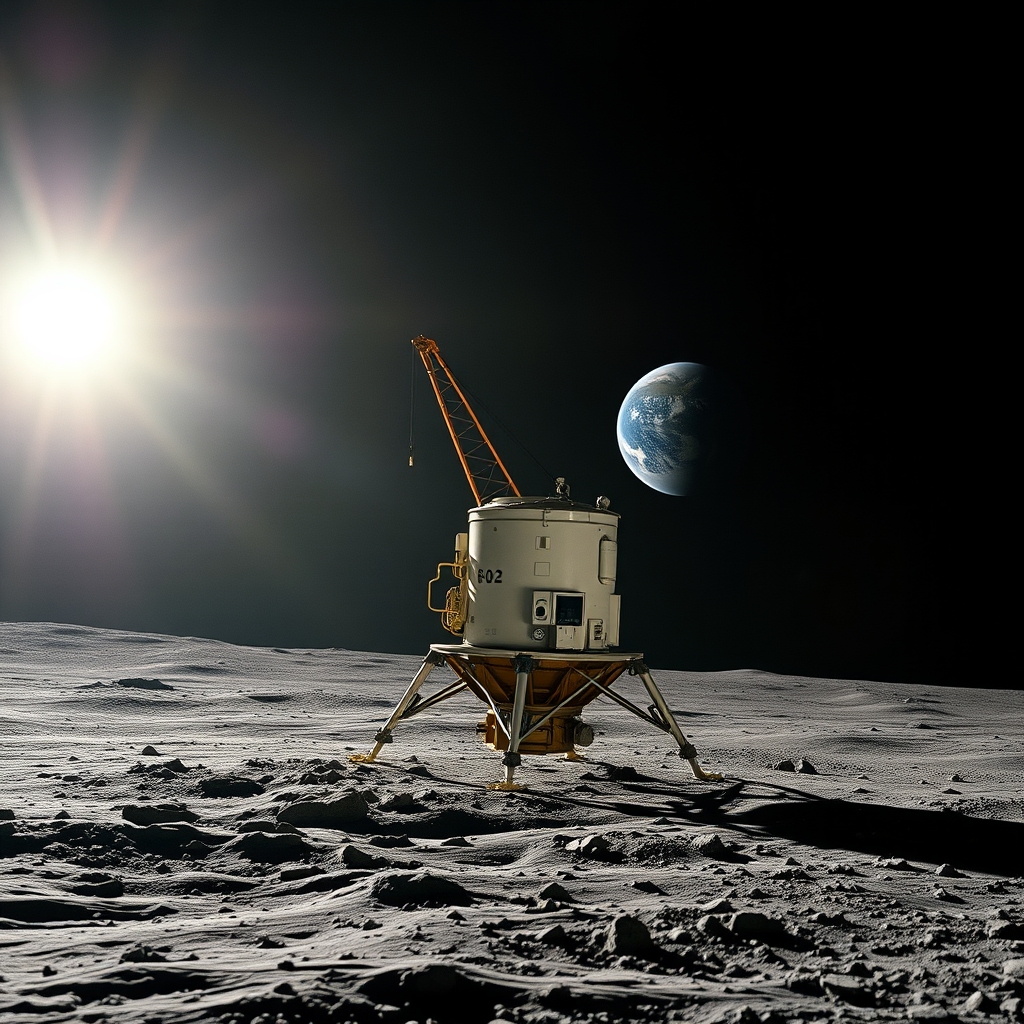
According to ESA Space Engineering & Technology, a Romanian‑Dutch team has built a lunar crane—called Loader—that can lift up to a tonne of cargo from the Argonaut lander and place it up to six metres away. The device promises to free landers from the cramped task of off‑loading heavy science instruments and construction parts, a step that could speed up the assembly of a permanent lunar base.
The Loader crane concept
The Loader crane is designed to travel folded inside the Argonaut lander’s payload deck. Once the lander touches down, a dedicated cable‑management system pulls the crane into a vertical stance, even on sloped terrain. Two joints support a long arm that ends in a pair of grippers: a passive, spring‑loaded gripper that locks without power and an active, battery‑driven gripper that can rotate the load for fine positioning. The whole system fits within the limited space of a lander while still being capable of moving a full tonne of material across the surface.
How the crane works on the Moon
Gravity on the Moon is roughly one‑sixth of Earth’s. That means a mass that feels 180 kg under Earth gravity only feels about 30 kg on the Moon. The scaled‑down test model in ESA’s Planetary Robotics Laboratory could lift 30 kg in Earth‑gravity, which translates to a little over 180 kg on the lunar surface. Because the real crane will be more than twice as large, the same mechanical advantage scales up to a full 1000 kg lift capacity in lunar gravity. The design relies on simple mechanical advantage—long lever arm, strong joints, and spring‑loaded locking—to minimise power consumption, an essential factor when operating on a lander’s limited energy budget.
Why a crane matters for lunar missions
Argonaut landers are slated to bring up to 1500 kg of cargo, ranging from rovers to habitat modules. Without a crane, each item must be either placed directly beneath the lander or moved by a robotic arm whose reach is limited to a metre or two. Sensitive instruments, such as seismometers, need a clear zone free from lander‑induced vibrations; building blocks for habitats must be spread out to form a stable foundation. A crane that can place loads six metres away removes these constraints, allowing mission planners to optimise payload layout and reduce the number of separate delivery missions.
Trade‑offs and next steps (Analysis)
The obvious benefit is the ability to move heavy items far from the lander, but the crane introduces new complexities. First, the deployment sequence must be flawless; any snag in the cable‑management system could leave the crane stuck, turning a valuable payload into dead weight. Second, the added mass of the crane (estimated at a few hundred kilograms when folded) reduces the net payload that the lander can carry. The trade‑off here is between a higher per‑mission payload capacity and the flexibility to rearrange that payload on the surface. In practice this usually means mission designers will allocate a portion of the Argonaut’s cargo mass to the crane itself, accepting a modest reduction in total delivered mass in exchange for a far larger operational envelope on the Moon. Finally, the passive gripper’s reliance on spring force limits how precisely it can position irregularly shaped loads; the active gripper mitigates this but consumes battery power, which must be budgeted.
Implications for future lunar infrastructure
If Loader proves reliable, it could become a standard accessory for all future lunar landers, not just ESA’s Argonaut. Commercial providers such as SpaceX or Blue Origin could integrate similar mechanisms, creating a de‑facto “lunar loading dock” that standardises how equipment is placed on the surface. This would lower the cost of building habitats, solar farms, and scientific arrays, because fewer specialized landers would be needed. Conversely, agencies that choose to forgo a crane may have to launch more landers to achieve the same distribution of hardware, driving up launch costs.
Quick checklist for engineers and planners
| Item | Test model (Earth) | Projected lunar performance |
|---|---|---|
| Lift capacity | 30 kg | ~180 kg (scaled) |
| Full‑size crane capacity | – | up to 1000 kg |
| Reach | 6 m (design) | 6 m |
| Power demand (active gripper) | Minimal (battery) | Limited, must be budgeted |
| Mass penalty on lander | – | a few hundred kg |
- Verify the cable‑management system under low‑gravity simulation before flight.
- Include redundant sensors to confirm the crane is upright on uneven terrain.
- Allocate a dedicated battery reserve for the active gripper to avoid draining the lander’s main power supply.
- Plan payload layouts that maximise the crane’s six‑metre reach, reducing the need for multiple lander drops.
By addressing these points today, mission teams can turn the Loader crane from a promising prototype into a reliable workhorse for the next wave of lunar exploration.