BepiColombo’s Mercury Transfer Module Separates, Paving the Way for Dual Orbiters
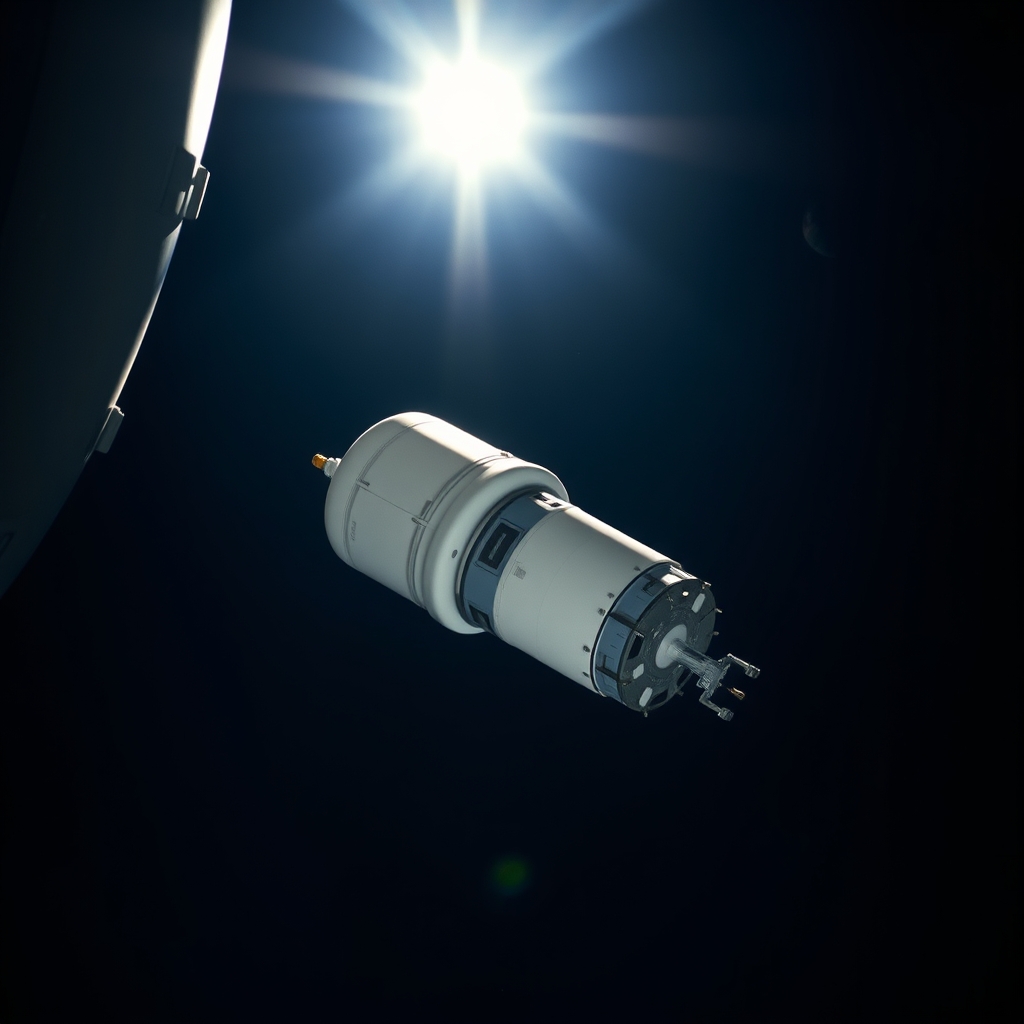
On 3 September 2026 ESA’s BepiColombo mission announced the successful separation of its Mercury Transfer Module (MTM) from the main spacecraft stack. The event clears the first hurdle on a six‑month arrival sequence that will end with two orbiters circling Mercury later this year.
According to ESA Space Science, the MTM split was confirmed at 15:49 CEST after a two‑hour wait for a Doppler signal from 200 million km away.
The Mercury Transfer Module: How Solar Electric Propulsion Got Us Here
The MTM is essentially a power‑and‑propulsion bus about the size of a small car. Its two 15‑metre solar wings harvested sunlight and fed four ion thrusters. Those thrusters work by ionising xenon gas, accelerating the plasma with an electric field, and ejecting it at high speed. Unlike chemical rockets, which burn fuel in short, high‑thrust bursts, solar electric propulsion (SEP) provides a gentle but continuous push. The thrust is tiny—on the order of a few millinewtons—but it never stops as long as the sun shines, allowing the spacecraft to spiral inward over years while using far less propellant.
SEP made BepiColombo’s eight‑year, 9.9‑billion‑kilometre cruise possible. A mid‑course power drop in 2025 forced the team to re‑plan the trajectory, but the high specific impulse (efficiency) of SEP kept the mission on schedule.
The Separation Sequence and What It Means for the Mission
At 12:00 CEST mission control gave the official “GO” for the MTM split. The actual command fired at 14:00 CEST. After separation the remaining stack—comprising the Mercury Planetary Orbiter (MPO) and the Mio lander—entered safe mode, re‑oriented, and sent a status check back to Earth. A preliminary Doppler shift at 14:20 CEST hinted that the two pieces were drifting apart; the full acquisition‑of‑signal at 15:49 CEST confirmed it.
The MTM now drifts in a heliocentric orbit, essentially a dead weight with no antenna or computer. Its job is done: it delivered power, thrust, and three monitoring cameras that captured an eight‑year photo diary of the voyage.
SEP vs. Chemical Propulsion
| Feature | Solar Electric Propulsion (SEP) | Chemical Propulsion |
|---|---|---|
| Thrust level | Millinewtons, continuous | Kilonewtons, short bursts |
| Specific impulse (efficiency) | ~3 000 s (very high) | ~300 s (low) |
| Propellant mass needed | Small (xenon) | Large (hydrazine, etc.) |
| Power source | Solar arrays (15 m wings) | Chemical reaction |
| Suitability for deep‑space cruise | Excellent | Poor |
| Suitability for rapid orbital insertion | Weak (needs assist) | Strong |
SEP’s efficiency allowed BepiColombo to carry the heavy scientific payloads without a prohibitively large fuel tank. The trade‑off is that SEP cannot provide the sudden, high‑energy burns required for Mercury‑orbit insertion; that job falls to MPO’s conventional chemical thrusters.
What the Successful MTM Split Actually Changes
The separation does not bring the spacecraft any closer to Mercury; the stack is still over three million kilometres away. What changes is risk profile and timeline. By shedding the dead weight, the remaining bus reduces mass, which in turn lowers the fuel budget needed for the final chemical burns. It also removes a potential source of contamination for the delicate Mio lander.
The hidden trade‑off is that the MTM’s solar arrays are no longer available to generate electricity. MPO must now rely solely on its own, smaller arrays, which limits the power margin for attitude control and thermal management during the next maneuvers. Mission controllers will monitor battery state‑of‑charge closely, especially as they approach the Mercury‑orbit insertion on 21 November.
For scientists, the real payoff is timing. With the MTM gone, the team can focus on fine‑tuning the trajectory for the upcoming Mio release in early December. Any delay in this phase would push back the final science orbit insertion scheduled for March 2027, compressing the window for Mercury observations.
Looking Ahead: The Next Manoeuvres and Science Timeline
The next critical step is a series of chemical‑propulsion burns using MPO’s thrusters to lower the peri‑Mercury distance. By late November the spacecraft will perform a Mercury orbit insertion, entering an elliptical path that will be circularised over subsequent weeks. Early December will see Mio detach and perform a fly‑by of the planet before settling into its own highly elliptical orbit.
Once both orbiters are stable, the mission will begin a two‑year science campaign. Instruments will map Mercury’s surface composition, probe its magnetic field, and measure the exosphere. The data will complement findings from NASA’s MESSENGER mission, allowing researchers to test models of planetary formation and solar‑wind interaction.
How You Can Follow the Journey
- Subscribe to ESA’s YouTube channel for live telemetry streams during upcoming burns.
- Visit the ESA Planetary Science Archive to download the MTM photo diary and future MPO/Mio data sets.
- Join the ESA citizen‑science portal to help classify surface features once the high‑resolution images are released.
Staying engaged now means you’ll be ready to dive into the science as soon as the orbiters start sending back data.