Tiny thrusters 3D‑printed on the ISS: first steps toward on‑orbit satellite parts
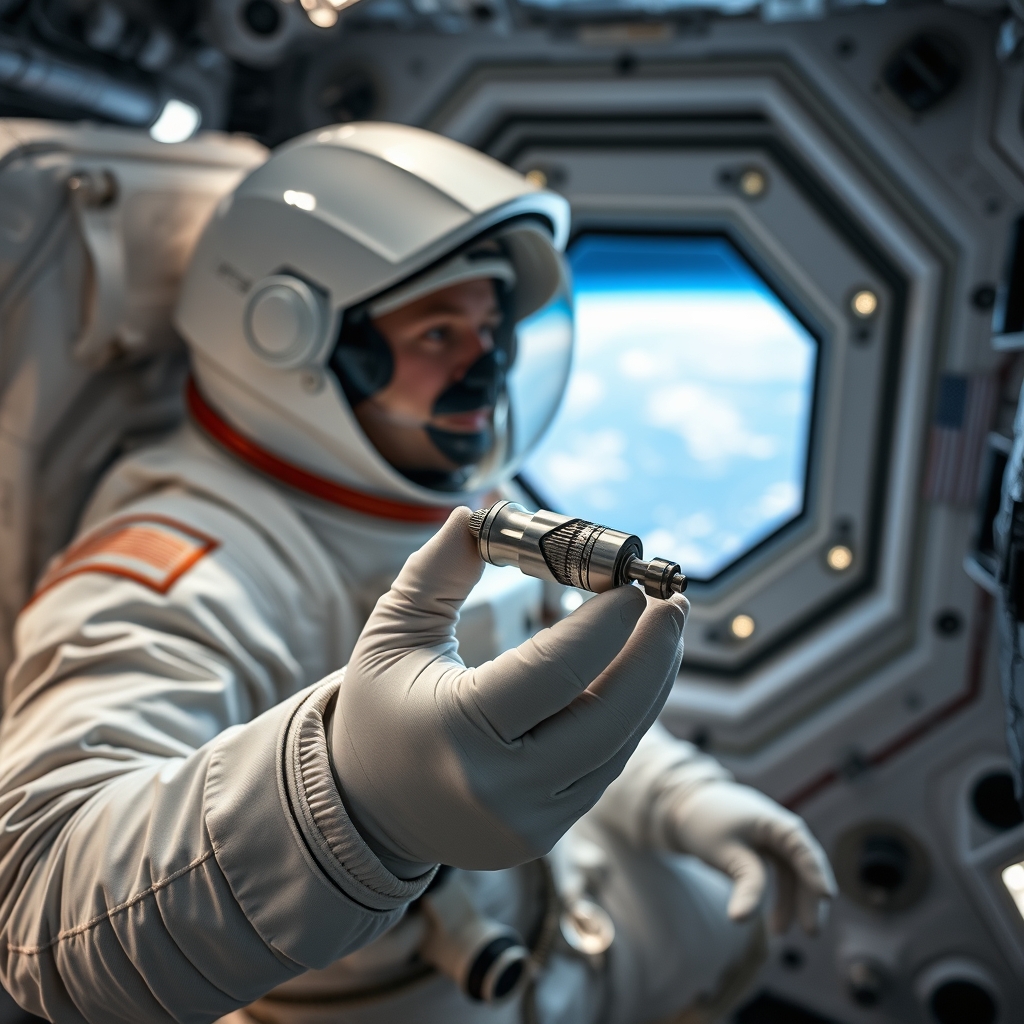
According to ESA Space Engineering & Technology, the fifth metal sample printed on the International Space Station has been brought back to Earth and contains the first thrusters ever made in orbit. The experiment shows that micro‑gravity does not stop a metal printer from creating components that could one day replace Earth‑based factories for certain satellite parts.
The first metal part printed in microgravity
In January 2024 the Columbus module’s metal‑laser sintering system produced its inaugural metal piece – a simple block that proved the printer could melt and fuse powder in the weightless environment of the ISS. After the block arrived at ESA’s ESTEC laboratory in the Netherlands, material scientists examined its micro‑structure, density and surface finish. Those measurements fed directly into the printer’s software, allowing the team to tweak laser power, scan speed and powder layering for the larger, more functional pieces that followed.
Tiny thrusters that left the ISS
The fifth sample consists of three parts: two miniature thrusters designed by the German Aerospace Center (DLR) and a larger support piece. One thruster was printed to match the final design as closely as possible; the second has extra wall thickness to give engineers room for post‑processing—polishing the interior bore to the exact diameter needed for propellant flow. ESA astronaut Sophie Adenot retrieved the hardware in July and returned it to Earth for testing on DLR’s vacuum test bench in Lampoldshausen. The upcoming hot‑fire tests will check whether the thrusters can survive the high temperatures and pressures of real‑world propulsion.
How metal 3D printing works on the station
The printer uses selective laser sintering (SLS). A thin layer of metal powder—typically a nickel‑based alloy for space applications—is spread across a build platform. A high‑power fiber laser scans the layer, fusing particles together where the part geometry calls for solid material. After a layer is completed, the platform lowers by the layer thickness (often 20–50 µm) and a fresh powder coat is spread. The process repeats until the part is fully built, then the unfused powder is brushed away.
In micro‑gravity the powder does not settle as it does on Earth. To keep the bed flat, the printer uses a small vibration system and a sealed chamber that creates a gentle gas flow, preventing the particles from drifting away. The lack of buoyancy also means heat dissipates only through conduction to the surrounding powder, so laser parameters must be adjusted to avoid overheating or incomplete melting. The ESA team’s early experiments identified a narrower “process window” – the range of laser power and speed that yields a fully dense part – and the subsequent thrusters were printed using those refined settings.
Space‑made versus Earth‑made thrusters: a side‑by‑side look
| Feature | Space‑printed thruster (ISS) | Earth‑printed thruster (conventional) |
|---|---|---|
| Manufacturing environment | Micro‑gravity, closed‑loop powder recycling | Ground‑based SLS with gravity‑assisted powder spreading |
| Wall‑thickness options | Two designs: exact shape & thicker‑wall version for post‑processing | Typically a single design, post‑processing done after printing |
| Expected dimensional tolerance* | ±0.1 mm (target) after post‑processing | ±0.05 mm (standard for aerospace parts) |
| Lead time from design to test article | ~3 months (including launch, print, return) | 1–2 weeks (no launch required) |
| Temperature resistance (tested) | To be verified in hot‑fire test, design for >1500 °C | Proven >1800 °C for flight‑qualified parts |
*Tolerance values are based on ESTEC’s preliminary measurements and typical Earth‑based SLS capabilities.
The table highlights the trade‑off between launch‑time flexibility and the current precision gap. While Earth facilities can produce tighter tolerances faster, on‑orbit printing eliminates the need to launch bulky spare parts and can create components directly where they will be used.
What the on‑orbit thrusters really mean for satellite production
The real impact lies in the logistics of satellite assembly rather than in raw performance. If a thruster can be printed on‑demand in orbit, operators could replace a failed propulsion unit without returning the whole spacecraft to Earth or carrying a spare on the launch vehicle. That reduces launch mass and gives satellite owners a path to extend mission life after an anomaly.
However, the current process still requires a full‑scale metal printer, a supply of metal powder, and a return‑to‑Earth shipment for validation. Until the hot‑fire tests confirm that the printed thrusters meet the same pressure and temperature margins as their Earth‑made counterparts, operators will be reluctant to rely on them for critical maneuvers. The trade‑off, therefore, is risk versus flexibility: using space‑made parts now adds uncertainty, but it also opens the door to a supply chain that is not tied to launch windows.
In practice this usually means satellite manufacturers will start by qualifying non‑critical hardware—like attitude‑control jets or small reaction‑wheel mounts—before moving to primary propulsion. The DLR team’s plan to compare the ISS‑printed thrusters with identical Earth‑printed parts will provide the data needed to decide where the balance tips.
What you can do today
- If you are involved in satellite design, flag any propulsion sub‑systems that could be swapped for an on‑orbit‑manufactured spare. Draft a contingency plan that references the upcoming DLR hot‑fire results.
- Follow the ESA and DLR news feeds for the test‑bench results, which are expected later this year. The data will indicate whether the printed thrusters meet the required thrust, specific impulse (efficiency), and durability.
- For research labs, consider applying for access to ESTEC’s post‑flight analysis program. Early‑stage material data from micro‑gravity prints can inform new alloy formulations tailored for space.
By keeping an eye on the test outcomes and beginning to map out where on‑orbit manufacturing could replace Earth‑based spares, the satellite community can be ready to turn this proof‑of‑concept into a practical capability.