GOMX-5 launch showcases automated propulsion and maritime monitoring for CubeSats
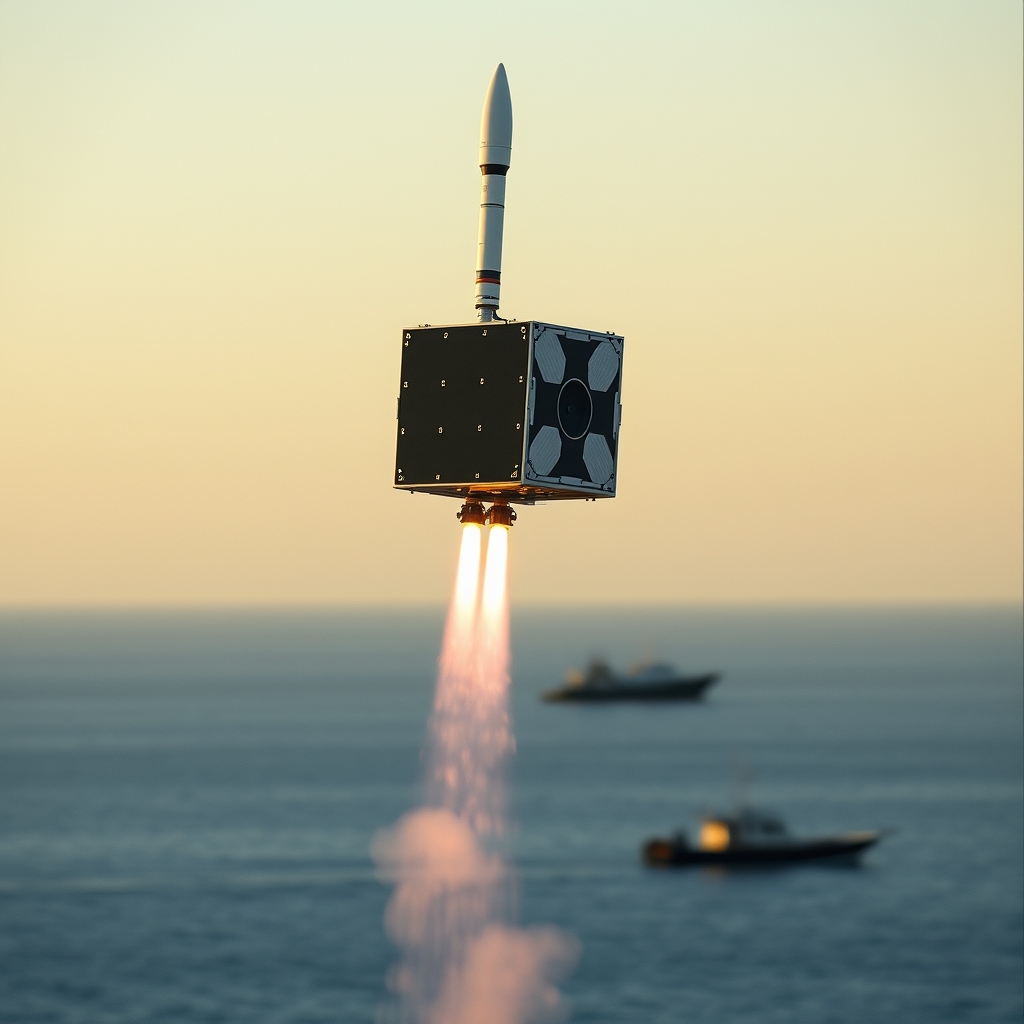
The European Space Agency’s newest technology demo satellite, GOMX-5, lifted off on 1 October 2026 aboard SpaceX’s Falcon 9 Transporter‑18. The 6U CubeSat is built to prove that a small satellite can launch its own propulsion within two days and use that thrust for collision‑avoidance manoeuvres, while also testing a solar‑tracking panel and a maritime‑domain‑awareness payload.
Automated commissioning cuts start‑up time
The mission’s headline feature is an automated platform‑commissioning routine that aims to make the propulsion system operational in under 48 hours after deployment. Traditional CubeSat operations often require several days of manual checks before thrusters can be fired. By scripting the health‑check, power‑up and software‑validation steps, GOMSpace engineers hope to shrink that window dramatically.
The propulsion unit is an electric thruster designed for the low‑thrust, high‑efficiency burns needed to shift a satellite’s orbit just enough to avoid a predicted conjunction. The automation reduces the workload on ground teams and gives operators a tighter response time when debris alerts arrive.
Payloads that expand CubeSat capabilities
Beyond propulsion, GOMX-5 carries two payload families that have never flown before:
| Feature | GOMX‑5 implementation | Earlier GOMX models |
|---|---|---|
| Propulsion | Automated electric thruster, commission ≤48 h | No on‑board propulsion (GOMX‑4B, GOMX‑3) |
| Solar panel | Tracking panel that follows the Sun, based on Hera’s Juventas tech | Fixed‑angle panels |
| Maritime awareness | Broadband antenna suite and radios for ship‑track detection | No maritime payload |
The tracking solar panel continuously aligns itself with the Sun, increasing power generation compared with fixed panels that can lose up to 30 % of output during orbit night. The maritime payload uses multiple antennas covering a wide frequency range to listen for ship‑borne signals, offering a proof‑of‑concept for low‑cost sea‑monitoring from space.
Context: debris mitigation and rideshare trends
Space is becoming more crowded, and ESA has recently tightened its debris‑mitigation policy. One requirement is that any satellite capable of manoeuvring must be ready to fire its thrusters within a short window after launch. GOMX‑5 is the first ESA‑supported CubeSat built to meet that rule.
Transporter‑18 was a dedicated rideshare mission carrying 129 payloads, illustrating the growing reliance on shared launches to keep costs low. The CubeSat’s ability to self‑protect reduces the burden on the launch provider and the overall traffic management system, because each satellite can react independently rather than waiting for a ground‑station command chain that might be congested.
The hidden trade‑offs of rapid‑fire propulsion
Automation sounds like a net win, but it introduces new risk factors. A script that boots the propulsion system in 48 hours must handle all possible anomalies without human oversight. If a sensor mis‑reads a voltage level, the thruster could fire unintentionally, creating debris instead of avoiding it. The trade‑off here is between speed of response and the confidence that a human operator would normally provide.
Another consideration is the mass‑budget penalty. Adding an electric thruster, fuel tanks and the associated power electronics takes up valuable volume in a 6U CubeSat, leaving less room for scientific payloads. Operators must decide whether the safety benefit outweighs the loss of other instruments.
Finally, the maritime‑awareness payload relies on broadband radios that could be subject to spectrum‑allocation rules in different jurisdictions. Demonstrating the hardware is one thing; gaining regulatory clearance for operational use is another, and that may slow commercial exploitation.
Practical steps for satellite developers today
If you are planning a CubeSat mission, consider the following actions:
- Prototype an automated commissioning sequence on the ground using hardware‑in‑the‑loop simulators before flight. Early testing reveals edge‑case bugs that are hard to fix later.
- Allocate mass for propulsion early in the design phase, rather than trying to retrofit it. This avoids squeezing payload volume at the last minute.
- Engage with spectrum regulators now if you intend to use broadband maritime‑monitoring radios. Early dialogue can prevent later certification delays.
- Plan for rapid debris‑avoidance by integrating your mission into ESA’s new policy framework. Demonstrating compliance can make your satellite more attractive to rideshare providers.
By following these steps, developers can harness the same lessons GOMX‑5 is testing and improve both safety and capability of future small‑sat missions.