Europe’s new silicon beamforming chips could reshape satellite communications
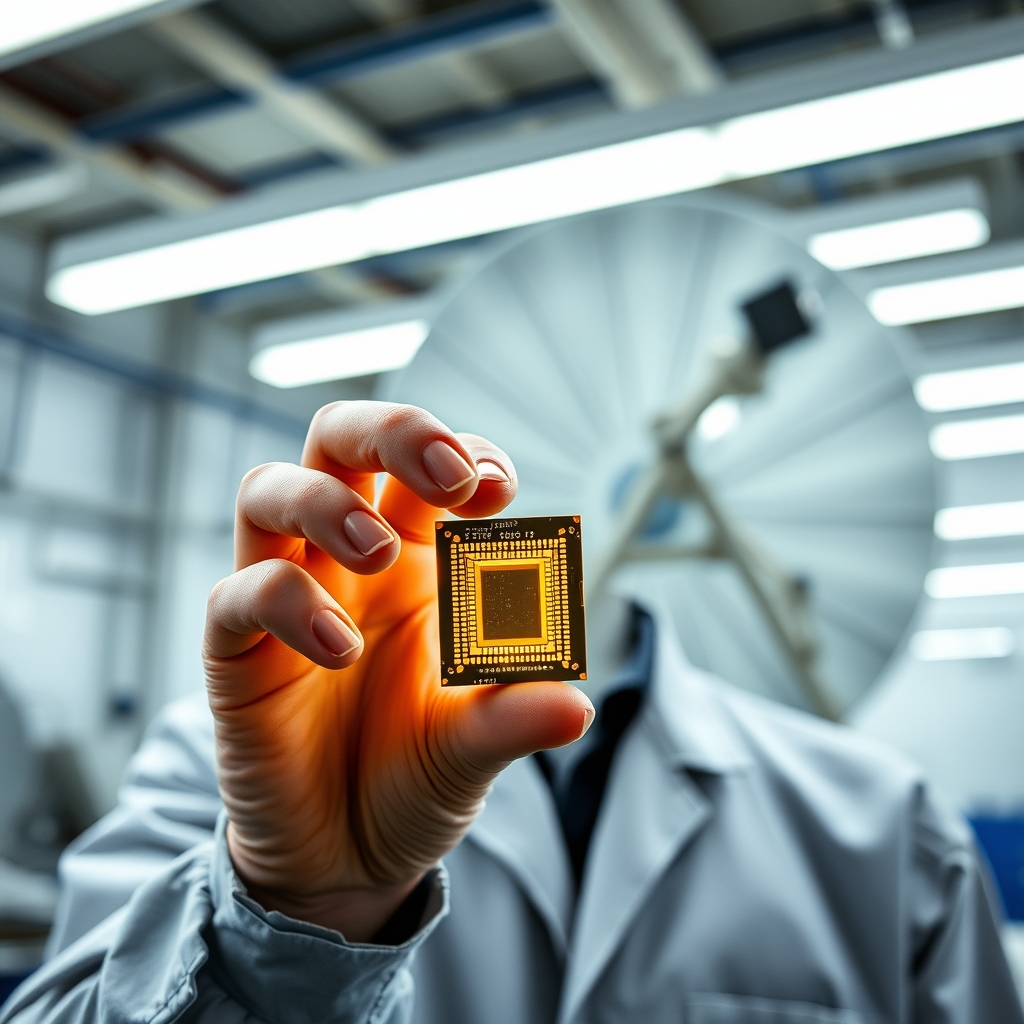
According to ESA Space Engineering & Technology, a new generation of silicon beamforming integrated circuits (ICs) from the French firm Asygn can steer radio beams with unprecedented precision, a step that could make phased‑array antennas compact enough for everyday satellite links.
How electronic beam steering works
Traditional dish antennas keep a line of sight by rotating the whole reflector, a mechanical solution that adds weight, wear and limited speed. Phased‑array antennas replace the moving dish with dozens or hundreds of tiny radiating elements. By adjusting the phase (the timing) and amplitude (the strength) of the signal fed to each element, the overall wavefront can be tilted toward a target. This process—called beamforming—creates a focused radio beam without any moving parts. The key is precise control: a small phase error can shift the beam direction by degrees, while amplitude tweaks shape the beam’s side‑lobes, affecting interference and link quality.
The silicon breakthrough
Beamforming ICs have existed for years, but early versions were large, power‑hungry, and often required a separate digital‑to‑analog converter for each antenna element. Modern silicon semiconductor processes now allow the entire beamforming chain—phase shifters, variable gain amplifiers, and low‑noise front‑ends—to sit on a single die. Asygn’s chips, designed for the X‑band (8–12 GHz) and Ka‑band (26.5–40 GHz), integrate high‑precision phase control and an ultra‑low noise figure on one package. The ESA demonstration showed the chip drawing the ESA logo on a test board simply by setting each element’s phase and amplitude, illustrating how hundreds of dots can be positioned individually.
Context: from mechanical dishes to fully integrated arrays
| Feature | Traditional mechanical dish | Early beamforming modules (separate components) | Asygn’s single‑chip solution |
|---|---|---|---|
| Moving parts | Yes, requires motors | No, but many discrete RF blocks | No, fully integrated on silicon |
| Size | Large (meter‑scale) | Moderate, many boards | Small, chip‑scale |
| Power consumption | High (motor + RF) | Moderate to high (multiple active blocks) | Lower, thanks to CMOS integration |
| Supply‑chain security | Depends on mechanical suppliers | Mixed, many foreign RF ASICs | European‑designed and fabricated |
| Cost per element | Expensive for many elements | Cost drops with volume, but still high per block | Potentially cheapest per element at scale |
The table highlights why a single‑chip approach matters: it removes the bulk of discrete hardware, cuts power, and ties the whole system to a European supply chain—a strategic advantage ESA repeatedly cites.
Who benefits and who faces new challenges?
Satellite operators gain a path to lighter, more reliable payloads. Smaller antennas mean cheaper launch masses and the possibility of fitting phased arrays on small‑sat platforms that previously could only host simple transponders. Ground terminals, especially portable or vehicular units, can become truly flat panels, expanding the market for broadband connectivity in remote areas.
On the flip side, manufacturers of legacy mechanical antenna hardware may see demand shrink. The shift also places higher demands on thermal management; packing many active components onto one die can raise junction temperatures, requiring careful heat‑sink design. Finally, while the chips promise an "ultra‑low noise figure," achieving that performance in a real‑world system still depends on board layout, shielding, and calibration algorithms—areas where expertise is still developing.
The trade‑off nobody spells out
Integrating analog and digital beamforming functions onto a single silicon die simplifies the hardware stack, but it also concentrates risk. A defect in the fabrication process could render an entire production batch unusable, whereas a modular approach can replace a single faulty block. Moreover, the analogue nature of phase shifters on silicon limits the granularity of phase steps compared with purely digital (baseband) beamforming, potentially reducing beam‑steering accuracy at the highest frequencies. In practice this means satellite designers must balance the allure of a compact, low‑cost chip against the need for fine‑grained control and redundancy.
What to watch next
ESA plans to qualify the Asygn chips for upcoming Earth‑observation and communication missions, so the next milestone will be a flight‑ready demonstration. Keep an eye on the RF Active Technology Laboratory’s test results for thermal performance and long‑term reliability. Parallelly, other European firms are pursuing fully digital beamforming ASICs that operate at baseband frequencies; a convergence of analogue front‑ends with digital back‑ends could offer the best of both worlds. Industry analysts will likely compare the on‑chip noise figures and phase resolution of Asygn’s solution with those of competing digital designs as they become publicly available.
Practical steps for engineers and decision‑makers
- Prototype early: Order evaluation boards of Asygn’s X‑band or Ka‑band chips to test beam‑forming algorithms on your own antenna layout.
- Validate thermal design: Simulate heat dissipation on a PCB with realistic power budgets; incorporate heat sinks or thermal vias if needed.
- Plan for redundancy: If mission critical, design the system to switch to a backup beamforming path (e.g., a secondary chip or a traditional RF module) in case of silicon failure.
- Monitor ESA announcements: ESA’s qualification schedule will indicate when the chips are cleared for flight, a key signal for procurement timelines.
- Engage with supply‑chain partners: Because the chips are produced in Europe, establish contacts with certified foundries early to avoid lead‑time surprises.
By understanding both the technical advantages and the hidden risks, satellite developers can decide whether the new silicon brain fits their next mission or whether a more modular approach remains prudent.