Student‑Built Radar Retroreflector Tested on Drone: A Cheap Way to Track Small Spacecraft
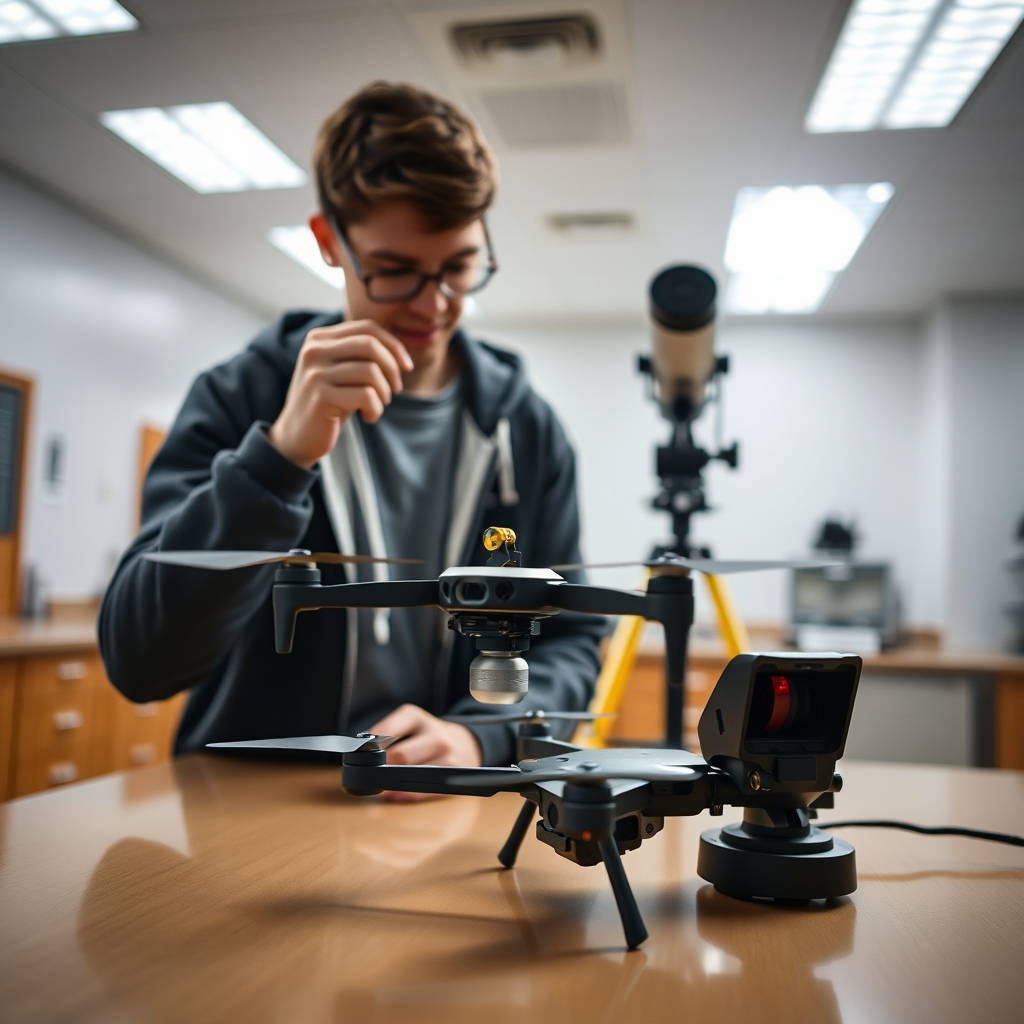
A drone lifted a 50 cm plastic tube with a 28 cm metal retroreflector over ESA’s ESTEC field, proving the device works in real‑world conditions. The test shows a cheap, passive method to keep tiny airborne objects visible to radar, a capability that could change how small rockets and drones are tracked.
According to ESA Space Engineering & Technology, the experiment was the first flight of a student‑developed radar retroreflector, built by a team from Ruhr University Bochum and tested by ESA engineers.
The Drone Test: A First Flight for a Student Retroreflector
The drone rose to 120 m and released the payload, which then hung 3 m above the field from a 5 m rope. The payload consisted of a 50 cm plastic tube that simulated a sounding‑rocket body, with a 28 cm metal tube covered in cavities attached to it. The team performed several maneuvers, moving the drone across the football field to expose the reflector to different angles and verify that radar signals bounced back toward the source.
How Radar Retroreflectors Work and Why They Matter
A retroreflector is a passive structure that returns an incoming electromagnetic wave back along its incoming path. The student device uses an array of corner‑cube‑like cavities cut into the metal tube. When a radar pulse strikes, the wave reflects off the interior surfaces and exits parallel to the incoming direction, regardless of the angle of incidence. Because the reflector contains no power source or electronics, it can be ultra‑lightweight and inexpensive, yet still make the host vehicle appear as a strong radar target. This simplicity is why such devices are attractive for small, expendable platforms that cannot carry heavy, active transponders.
Advantages Over Traditional Metal Rocket Radar Signatures
Metal rockets already reflect radar, but their signature depends heavily on viewing angle; a flat metal skin can become invisible when the radar looks at it edge‑on. The student retroreflector extends the detectable angular range and does so without adding significant mass.
| Feature | Conventional Metal Body | Student Retroreflector |
|---|---|---|
| Radar visibility angle | Limited; drops off sharply at edge‑on views | Broad; retains strong return from many angles |
| Power requirement | None (passive) but relies on metal surface geometry | None (fully passive) |
| Cost | Depends on material and machining; typically higher | Cheap; 3D‑printed and laser‑cut parts |
| Radar type needed | Any standard radar can see metal, but may need high power for small bodies | Automotive‑grade radar (used in driver‑assist systems) works fine |
| Weight impact | Metal skin adds structural weight | Minimal extra mass, mostly the 28 cm tube |
The table highlights that the retroreflector can be detected with the same inexpensive automotive radar that already warns cars of obstacles, eliminating the need for specialised "space‑grade" radar equipment.
Next Steps: From Field Test to Sounding Rocket Launch
Having confirmed the concept on a drone, the team plans a sounding‑rocket flight in Brno, Czech Republic later this summer. The rocket will climb to one kilometre altitude, carrying the same retroreflector mounted on a longer plastic tube that mimics a real payload. The launch will involve a broader partnership: ESA, Ruhr University Bochum, Imperial College London, and the Czech Rocket Society, which will provide its new Sherpa rocket. Successful operation at altitude would demonstrate that the reflector survives launch stresses and continues to provide a strong radar return in a true flight environment.
Analysis: Trade‑offs and What to Watch in Future Deployments
The biggest benefit is the low cost and simplicity—no power, no active electronics, and compatibility with off‑the‑shelf automotive radar. The trade‑off is that the reflector only works when the radar operates at frequencies compatible with the cavity dimensions; automotive radar typically runs at 77 GHz, which may differ from frequencies used by air‑traffic‑control or space‑surveillance radars. If a ground station uses a different band, the retroreflector’s efficiency could drop sharply. Moreover, passive devices cannot transmit identification data, so they improve detectability but not distinguishability. In practice this means that while a small rocket becomes easier to spot, it still appears as a generic radar target, offering no extra telemetry.
What to watch: (1) Frequency compatibility – future tests should verify performance across the 24 GHz, 77 GHz, and 94 GHz bands commonly used in aerospace radar. (2) Thermal durability – the reflector will face higher heating during real launches; material testing will be needed. (3) Regulatory acceptance – air‑space managers may need to certify that adding retroreflectors does not interfere with existing radar filters. Stakeholders such as small‑sat developers, university rocketry clubs, and drone manufacturers stand to gain from a cheap tracking aid, while traditional radar manufacturers may see reduced demand for specialised high‑power tracking units.
Practical Take‑aways
If you are involved in a university rocketry program or operate a fleet of small drones, consider adding a 3D‑printed retroreflector to improve radar visibility without extra power budget. Start by designing a metal tube with corner‑cube cavities sized for the 77 GHz automotive band, then test it on a tethered drone as ESA did. Verify the return signal with an off‑the‑shelf automotive radar module before committing to a flight test. This low‑risk step can make your vehicle traceable for safety and compliance purposes.