Run Your Code on ESA’s Hera: Deep‑Space Software Sandbox Opens to Innovators

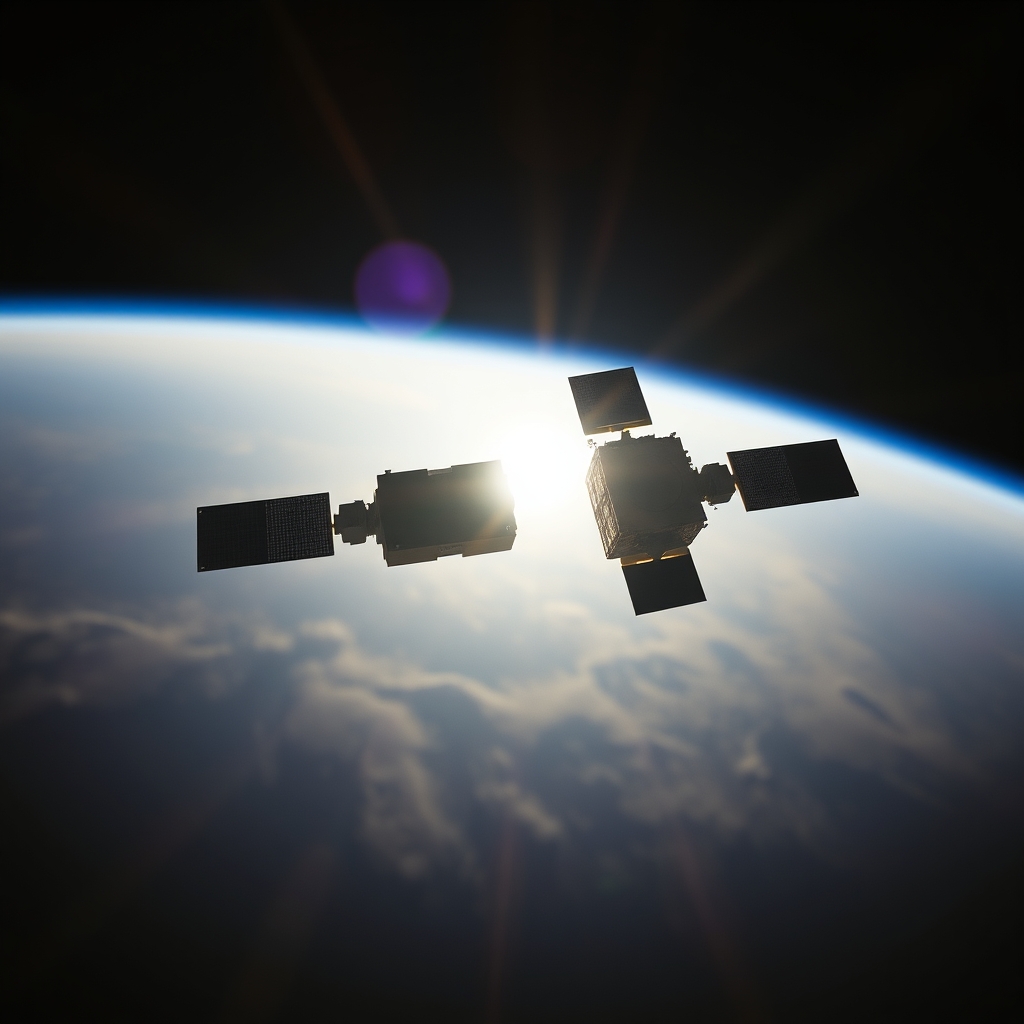
According to ESA Space Engineering & Technology, the agency will let European researchers and companies run experimental software on the Hera spacecraft when it drifts 150 million km from Earth in mid‑2027. The offer turns a planetary‑defence mission into a real‑time laboratory for onboard intelligence, image processing and AI‑driven autonomy.
Hera’s Primary Mission and the New Laboratory Phase
Hera was launched in 2024 to rendezvous with the binary asteroid system Didymos‑Dimorphos. After the spacecraft reaches Dimorphos this autumn, it will conduct a close‑up investigation of the crater left by NASA’s DART impact in 2022. The primary science campaign is expected to finish by autumn 2026. Rather than shutting down, the probe will then spend a month in August 2027 hosting external software experiments, effectively becoming a flying testbed far beyond Earth’s immediate communication reach.
How the Dual‑Core Sandbox Keeps the Mission Safe
The on‑board computer is a European‑made dual‑core LEON3 processor. One core runs the flight‑critical software that controls navigation, communications and the science instruments. The second core hosts a sandbox environment that isolates guest code from the spacecraft’s essential functions. The sandbox is pre‑validated, has limited access to hardware, and automatically shuts down the experiment after two to three hours or at the first sign of an anomaly.
| Feature | Flight‑Critical Core | Sandbox Core |
|---|---|---|
| Primary role | Execute mission‑essential commands | Run external experiments |
| Access to hardware | Full (navigation, propulsion, instruments) | Restricted (selected instrument data, limited command set) |
| Runtime limit | Continuous for mission duration | 2–3 hours per experiment |
| Fault handling | Redundant, real‑time recovery | Immediate shutdown on error |
| Processor workload | Mission‑critical load balancing | Isolated, low‑priority tasks |
The architecture mirrors the “separation kernel” concept used in safety‑critical avionics, where a high‑assurance domain protects a lower‑assurance domain. By dedicating a whole core to the sandbox, ESA reduces the risk of a rogue program affecting the spacecraft’s trajectory or scientific payload.
What Innovators Can Propose
The call invites “targeted, innovative experiments that push onboard intelligence beyond today’s procedural boundaries.” Potential topics include:
- On‑board AI that classifies images in real time, reducing the need to downlink raw data.
- Adaptive navigation algorithms that adjust thrust profiles without ground input.
- Fault‑diagnosis software that autonomously isolates and reports subsystem issues.
- Novel data‑compression schemes tailored to deep‑space bandwidth constraints.
Proposals must be submitted via the Open Space Innovation Platform (OSIP) as an outline form. ESA will evaluate ideas in mid‑October 2026, request full source code by 31 May 2027, and schedule the approved experiments for a one‑month window in August 2027.
Trade‑off: Safety vs Innovation in a Live Deep‑Space Mission
The obvious benefit is early‑in‑flight validation of technologies that would otherwise wait for a dedicated CubeSat or a future mission. The hidden cost is the additional operational overhead of vetting and integrating external code while the spacecraft is already operating far from Earth. ESA mitigates this by limiting runtime to a few hours and by using a completely separate processor core, but the sandbox still shares power, thermal and communication resources with the primary mission. In practice this means that an experiment that consumes more than its allocated CPU slice or generates unexpected electromagnetic interference could force the mission team to re‑allocate margins, potentially delaying other science activities. The trade‑off is therefore between accelerated technology readiness and a modest reduction in the mission’s operational flexibility during the experiment window. Stakeholders who value rapid demonstration—research labs, start‑ups, and European industry—gain a rare testbed, while mission planners must accept a small, managed risk to the primary science timeline.
How to Get Involved Right Now
- Register on ESA’s Open Space Innovation Platform if you haven’t already.
- Draft a concise outline (max 2 pages) describing the algorithm, required instrument data, and expected CPU/energy usage.
- Submit the outline before the mid‑October 2026 deadline.
- If selected, prepare a fully documented code package for ESA’s validation team before 31 May 2027.
- Keep an eye on ESA’s public updates; the August 2027 experiment window will be announced with exact dates and telemetry access details.
By following these steps you can turn a concept that lives on a laptop today into software that actually runs 150 million km from Earth, testing autonomy where ground control latency is measured in minutes instead of seconds.