How ESA’s Proba‑3, Solar Orbiter, and a Musical Simulation Illuminate the 2026 Solar Eclipse
On 12 August 2026 a total solar eclipse will sweep across parts of Greenland, Iceland, Spain and Portugal, turning day into twilight for just over two minutes. ESA is turning that brief window into weeks of scientific data by combining an artificial eclipse created by the Proba‑3 mission, fresh magnetic maps from Solar Orbiter, and even a musical rendering of the event.
Proba‑3’s artificial eclipse: the mechanics behind the mimicry
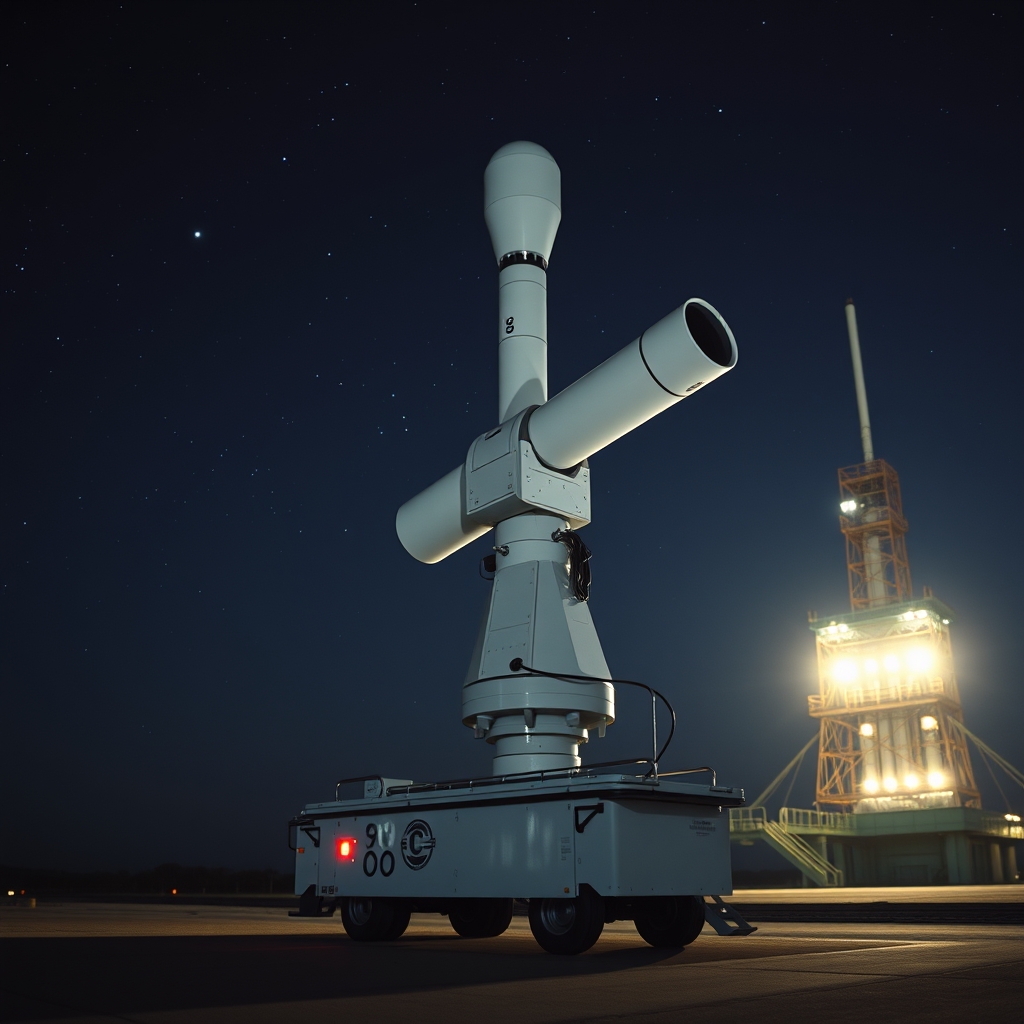
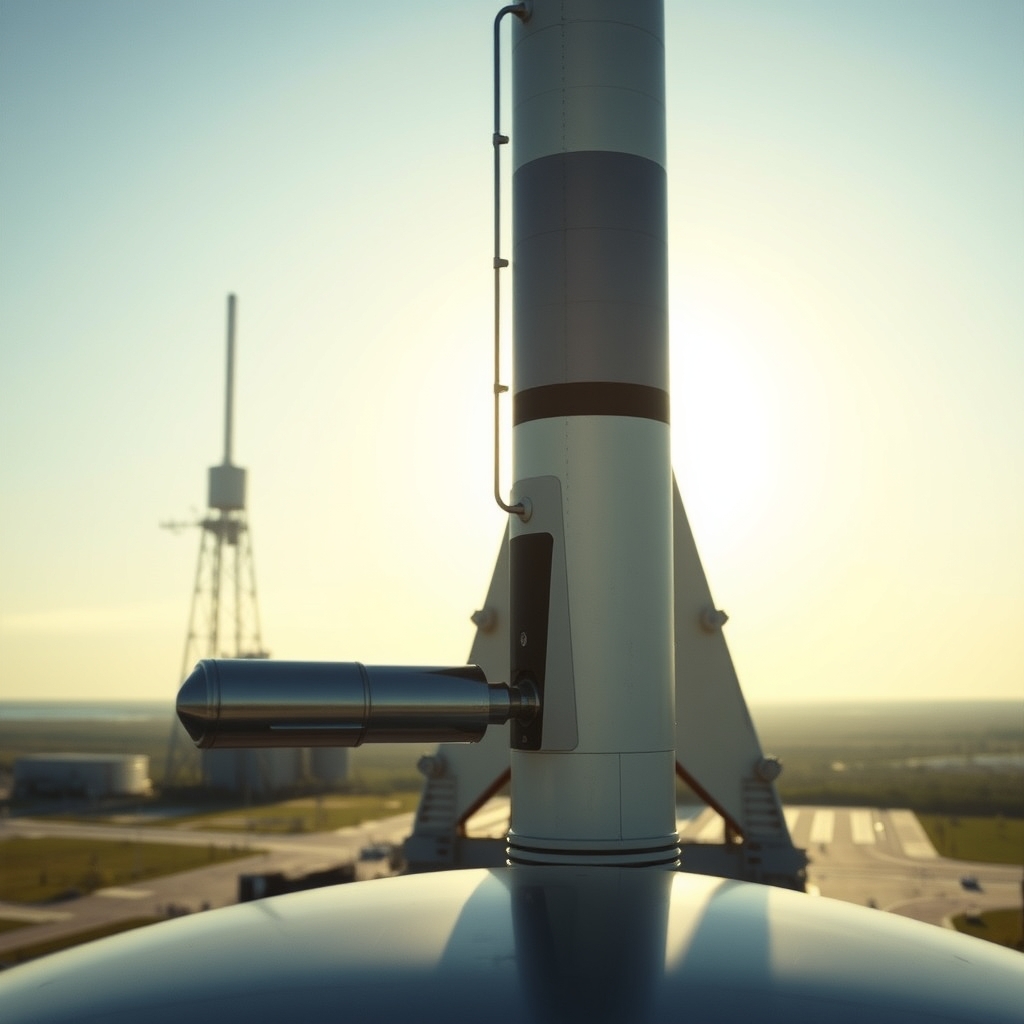
A traditional coronagraph blocks the Sun’s bright disc with a metal disc inside a telescope, allowing the faint outer corona to be imaged. The technique works well for the outer corona but fails to capture the inner region that lies just above the solar surface. ESA solved that gap with Proba‑3, a pair of satellites that fly 150 metres apart and operate as a single instrument. One spacecraft – the Occulter – plays the role of the Moon, positioning its sun‑shade directly in front of the Sun for the second spacecraft, the Coronagraph, which houses the ASPIICS camera.
During each “eclipse” the Coronagraph can stare at the Sun for hours, recording the inner corona that would otherwise be lost in the glare. According to ESA Space Engineering & Technology, the most recent event was the 62nd eclipse of Proba‑3’s nominal operations, captured about two weeks before the natural eclipse on 12 August. By mirroring the image horizontally – a simple transformation that accounts for the Sun’s half‑rotation in two weeks – scientists can predict what the natural eclipse’s corona will look like from Earth.
| Feature | Natural eclipse | Proba‑3 artificial eclipse |
|---|---|---|
| Duration of totality | ~2 minutes (max) | Hours (continuous) |
| Spatial coverage | Line of totality on Earth | Full 360° view from space |
| Observation gap | Inner corona hidden | Inner corona visible |
| Frequency | Rare, location‑specific | Repeated on demand |
The artificial eclipse therefore stretches the observation window from minutes to hours, giving modelers a much richer data set to test their predictions of coronal structure.
Solar Orbiter’s complementary viewpoint
Most solar observatories sit near Earth, offering a single‑angle view of a three‑dimensional star. ESA Space Science notes that Solar Orbiter follows a distinct orbit, currently facing the side of the Sun that will rotate into Earth’s line of sight in the coming weeks. Its Polarimetric and Helioseismic Imager (PHI) records magnetograms – maps of the Sun’s surface magnetic field – from this unique angle. The data reveal a newly emerging active region that would be invisible from Earth‑bound instruments. By feeding these magnetograms into space‑weather models, scientists can refine forecasts of how the corona will appear during the eclipse.
Jorge Amaya, ESA’s Space Weather Modelling Coordinator, stresses that total eclipses let researchers verify their magnetic‑field simulations against real‑world images. The combination of Proba‑3’s long‑duration inner‑corona imaging and Solar Orbiter’s three‑dimensional magnetic context provides an unprecedented test of the physics that drives solar wind and coronal‑mass‑ejections (CMEs). Looking ahead, ESA plans to launch the Vigil mission in 2031, which will trail Earth and deliver continuous near‑real‑time solar observations, further tightening the feedback loop between model and measurement.
Musifying the eclipse: data turned into sound
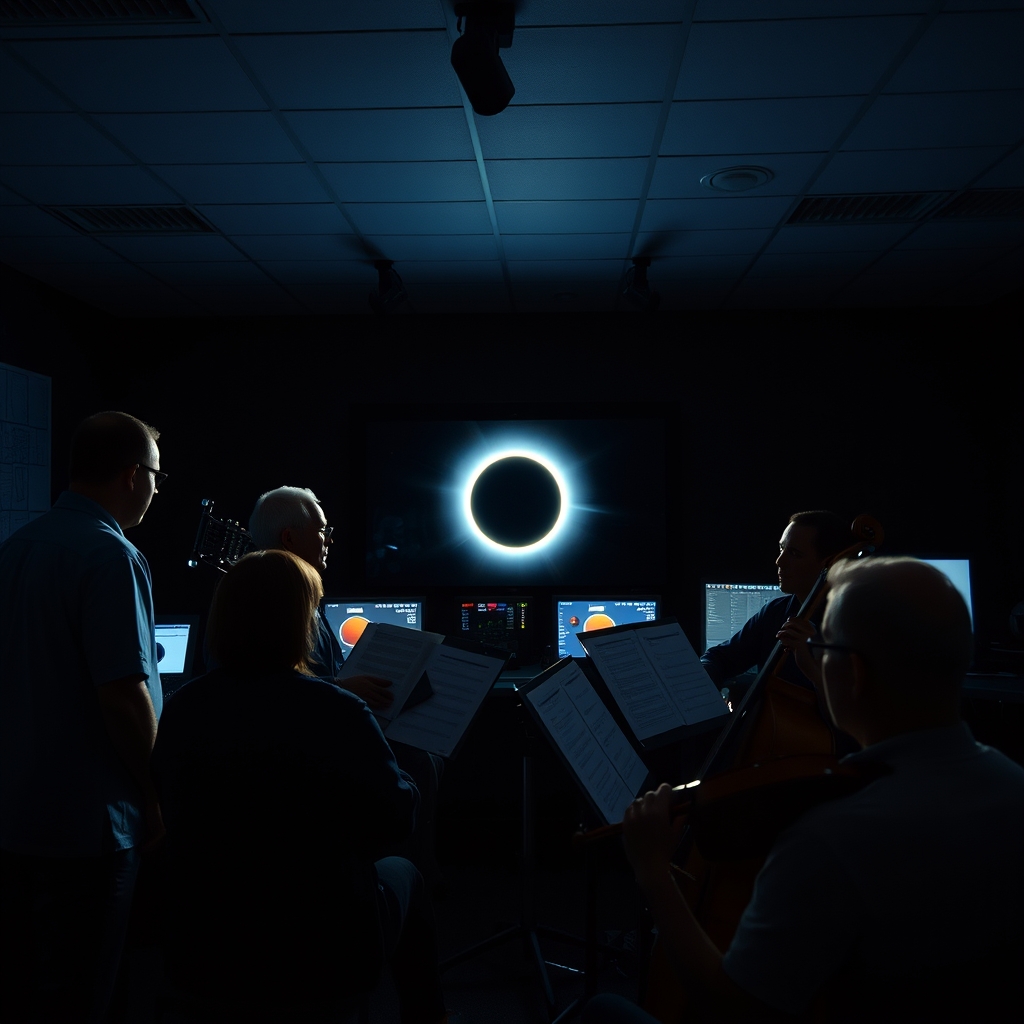
ESA Space Science also reports a musification of the 12 August eclipse, created by the agency’s CESAR team together with Rubén García Benito of the Instituto de Astrofísica de Andalucía (IAA‑CSIC). The project translates nine eclipse‑related parameters, extracted from a Stellarium simulation, into musical elements. Only this outlet mentions the musification, so the description is attributed solely to it.
| Parameter (data source) | Musical element | How it is derived |
|---|---|---|
| Visible sunlight intensity | Arpeggio (rapid note succession) | Rhythm, range (≈four octaves) and volume follow the light’s brightness and colour |
| Sky colour | Pad (background chord) | Darker chord as the light becomes redder and warmer |
| Darkness depth | Bass (sub) | Loudest during totality |
| Rate of light decline | Heartbeat | Tension slows to a stop at totality |
| Eclipse contacts (C1, C2, max, C3) | Bells | Precise timing marks each contact |
| Solar corona | Shimmering sound | Placed at the moment of totality |
| Sun disappearing behind horizon | Descending whoosh | Symbolic sound, not measured wind |
| Onset of night | Low night drone | Starts when the Sun drops below the horizon |
| First visible stars | Soft sparkling tones | Triggered when stars become observable |
The result is an artistic interpretation that lets listeners experience the eclipse’s progression through sound, streamed live from the Observatorio Astrofísico de Javalambre in Spain. The music does not replace scientific data, but it provides an engaging outreach tool that can attract new audiences to space‑weather science.
What changes for space‑weather forecasting – and what remains a challenge
The headline benefit is far longer, multi‑angle observation of the inner corona, which directly improves the fidelity of magnetic‑field models. In practice, the trade‑off is operational complexity: coordinating two satellites 150 m apart demands autonomous formation‑flying technology that is still relatively new. Any failure in the occulter‑coronagraph alignment would abort an eclipse session, limiting data continuity.
Another subtle limitation is the temporal mismatch between artificial and natural eclipses. Proba‑3’s images are taken weeks before the real event; while large‑scale coronal structures tend to persist, rapid changes – such as sudden eruptions – can still invalidate predictions. Modelers therefore treat Proba‑3 data as a baseline that must be updated with near‑real‑time inputs from Solar Orbiter and, eventually, Vigil.
Who gains? Satellite operators, power‑grid managers, and any service that depends on reliable radio communications can benefit from more accurate space‑weather alerts. Academic researchers gain a richer dataset for testing theories of coronal heating and solar wind acceleration. The broader public gains a novel way to experience the eclipse through music, potentially sparking future interest in STEM fields.
What to watch next? The launch of Vigil in 2031 will close the current gap of continuous Earth‑side solar monitoring. In the meantime, the live broadcast of the 2026 eclipse (including the musified version) provides a real‑time laboratory for both scientists and citizen scientists to compare model forecasts with observations.
How to engage with the eclipse today
- Visit ESA’s eclipse portal at esa.int/solareclipse for the latest prediction maps and live‑stream links.
- Download the current corona prediction from eclipse.predsci.com and overlay it on a sky‑watching app to identify the exact timing for your location.
- Listen to the musification on the CESAR team’s YouTube channel or directly from the Javalambre observatory’s live stream to hear the eclipse before it happens.
- If you have a modest solar filter, attend a safe, public viewing event in Spain or Portugal and compare the visual corona with Proba‑3’s simulated images.
- Sign up for ESA’s citizen‑science alerts to receive notifications when new solar‑weather data become available.
By combining artificial eclipses, multi‑viewpoint magnetograms, and creative sound design, ESA turns a fleeting celestial event into a multi‑week research campaign that sharpens our ability to forecast space weather and brings the Sun’s hidden atmosphere closer to everyone’s everyday experience.