Roman Telescope Launches to Map Dark Energy and Exoplanets
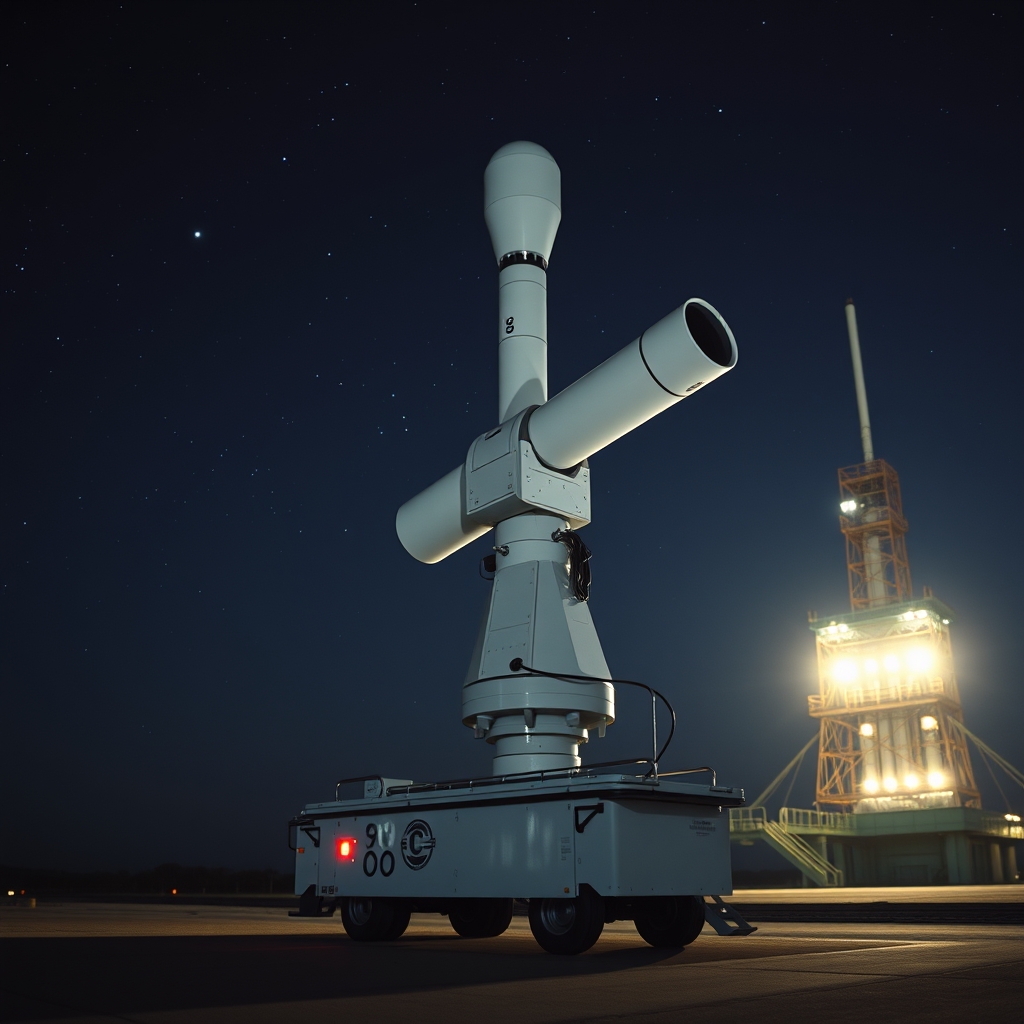
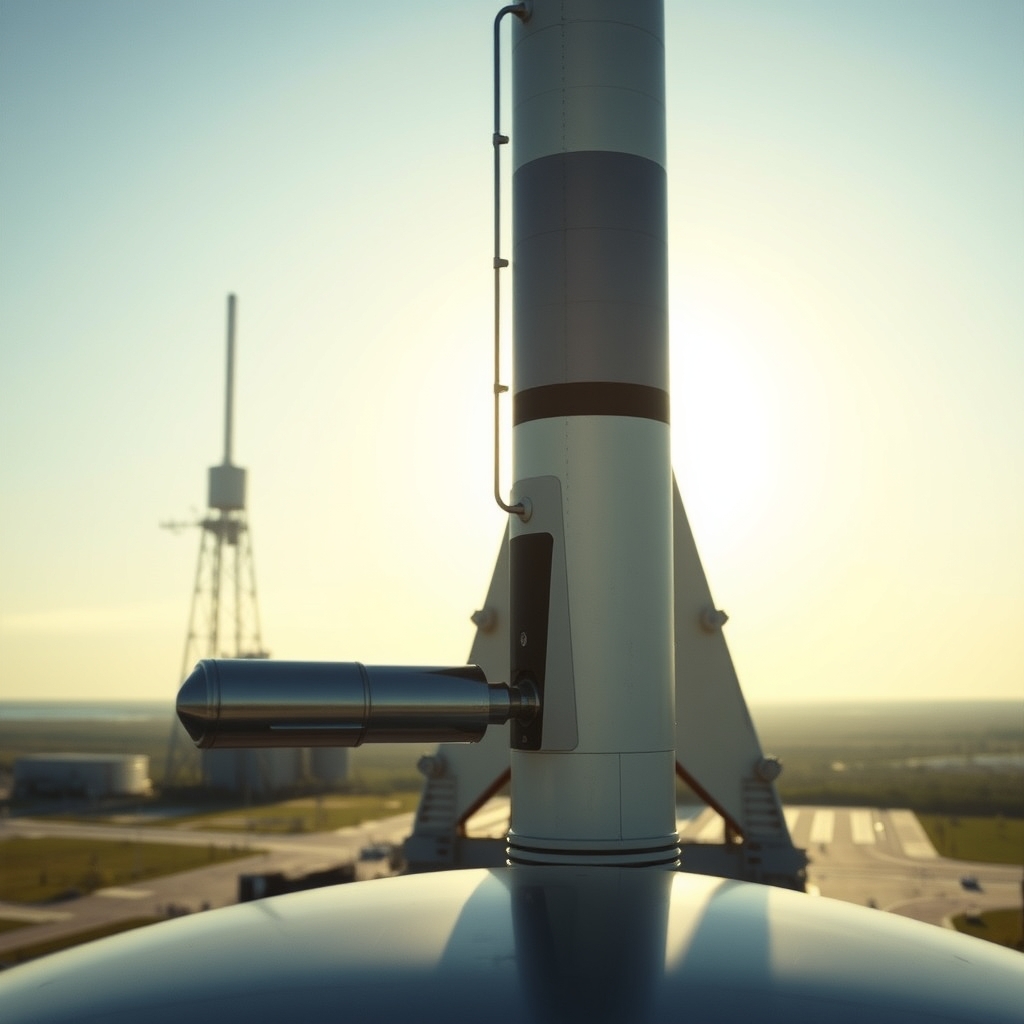
According to ESA Space Science, NASA’s Nancy Grace Roman Space Telescope lifted off on a SpaceX Falcon Heavy from Kennedy Space Center at 07:26 EDT on 30 August 2026. The launch starts a five‑year mission to scan the infrared sky, a data set that could sharpen our picture of dark energy and add thousands of worlds to the exoplanet census.
A Wide‑Field Infrared Eye
Roman carries a 2.4‑metre primary mirror— the same size as the Hubble Space Telescope— but its Wide Field Instrument (WFI) covers an area 100 times larger in a single exposure. The instrument records light from visible to near‑infrared wavelengths, a range where distant galaxies and supernovae are brightest. By repeatedly imaging the same patches, Roman will track how galaxy clusters grow and how type Ia supernovae brighten over time, both key signals of the Universe’s expansion.
The Dark Energy Question
Dark energy, the mysterious force accelerating cosmic expansion, could be a constant property of space or a field that changes over billions of years. Roman’s survey will map the three‑dimensional distribution of millions of galaxies and measure distances to thousands of supernovae. If the expansion rate varies with redshift, the data will reveal a deviation from the simple “cosmological constant” model. Conversely, a steady rate would bolster the constant‑dark‑energy hypothesis. Either result forces theorists to refine or replace current models of fundamental physics.
Exoplanet Census in the Infrared
Roman’s coronagraph instrument, a technology demonstration, will directly block starlight to capture faint planets nearby. More importantly, the WFI will conduct a microlensing survey toward the Galactic bulge. In microlensing, a foreground star (and any planets it hosts) bends light from a background star, creating a brief brightening. This method is sensitive to cold, distant planets and even rogue planets that drift without a host star. The expected yield is several thousand new worlds, many of them beyond the reach of the transit technique used by missions like Kepler and TESS.
How Roman Differs From Its Peers
| Feature | Roman | Euclid (ESA) | James Webb Space Telescope |
|---|---|---|---|
| Primary mirror diameter | 2.4 m | 1.2 m | 6.5 m |
| Main wavelength range | Visible‑to‑near‑IR (0.5–2.3 µm) | Near‑IR (0.9–2.0 µm) | Near‑ and mid‑IR (0.6–28 µm) |
| Survey speed (deg² per hour) | ~0.5 | ~0.2 | N/A (pointed observations) |
| Primary science goals | Dark energy, exoplanet census, dark matter | Dark energy, large‑scale structure | Early galaxies, star formation, exoplanet atmospheres |
| Orbit | Sun‑Earth L2 halo orbit | Sun‑Earth L2 halo orbit | Sun‑Earth L2 halo orbit |
Roman’s larger mirror and faster survey cadence give it a distinct advantage for wide‑area studies, while Euclid’s design focuses on precision measurements of galaxy shapes for weak‑lensing studies. JWST, with its much larger mirror, excels at deep, narrow observations rather than broad sky coverage.
What the Launch Actually Changes (Analysis)
The launch does not instantly solve the dark‑energy puzzle, but it shifts the timeline for decisive data. Until now, constraints rely on a patchwork of supernova samples, baryon‑acoustic‑oscillation measurements, and cosmic‑microwave‑background data. Roman will deliver a homogeneous, high‑precision set that reduces systematic uncertainties tied to instrument cross‑calibration. The trade‑off is a heavy reliance on the L2 environment; any anomaly in the spacecraft’s thermal shielding could bias the infrared photometry and thus the distance ladder. ESA’s contribution of star trackers and the New Norcia ground antenna means the mission’s data flow will be more resilient, but it also introduces a dependence on international ground‑segment coordination.
From a community standpoint, astronomers who need large statistical samples— for example, those modeling galaxy evolution— will gain immediate access to a public data release after the commissioning phase. Researchers focused on individual exoplanet atmospheres may find Roman less directly useful, as its strength lies in detecting planets rather than characterising them spectroscopically. Funding agencies should watch the first‑year data quality reports; if thermal stability meets expectations, the mission could be extended beyond its baseline ten‑year lifetime, amplifying its scientific return.
Practical Steps for Researchers and Enthusiasts
- Sign up for the Roman Science Archive mailing list now; the first data release is scheduled for early 2027.
- If you work on dark‑energy theory, prepare pipelines that ingest Roman’s galaxy‑clustering catalogs alongside existing Euclid data.
- Amateur astronomers can follow the mission’s progress through ESA’s live webcast and use the public images to practice photometry on known supernova fields.
- Keep an eye on the health of the New Norcia antenna; any service interruption could delay data downloads, affecting time‑critical projects.
By integrating Roman’s wide‑field infrared maps with complementary surveys, the community will be positioned to test whether dark energy is a static cosmological constant or a dynamic field, and to fill the missing pieces of our galactic neighbourhood.