Roman Space Telescope: How a 2.4 m Mirror Aims to Uncover Dark Energy and New Worlds
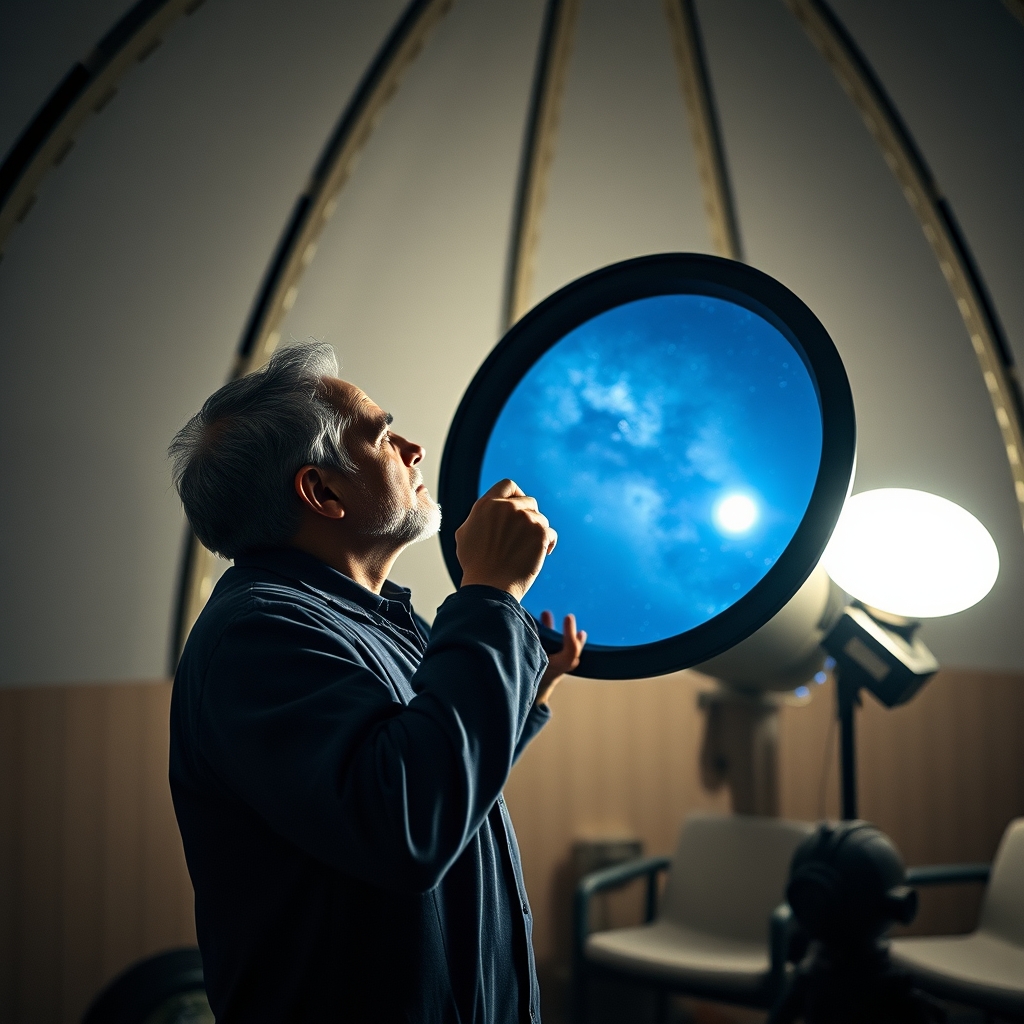
According to ESA Space Science, the Roman Space Telescope will scan a large patch of the sky in visible to near‑infrared light, using a wide field of view and advanced optical design. The mission is expected to sharpen our picture of dark energy, map dark matter, and reveal new exoplanets, making it a key step forward in observational cosmology.
Scanning the sky with a 2.4 m primary mirror
Roman carries a primary mirror that is 2.4 m across – the same diameter as Hubble’s – but its optics are arranged to deliver a field of view many times larger. The telescope operates from visible wavelengths (roughly 0.5 µm) out to the near‑infrared (about 2 µm), a range that captures the glow of distant galaxies and the reflected light of nearby planets. By covering a broad swath of sky in a single pointing, Roman can build statistically powerful maps of the universe’s large‑scale structure, a prerequisite for measuring how dark energy drives cosmic acceleration.
The Wide Field Instrument: a survey powerhouse
Roman’s Wide Field Instrument (WFI) is the workhorse for its cosmology program. It is a digital camera composed of an array of infrared detectors that record the sky in multiple filters. The WFI’s design emphasises speed and area: each exposure covers roughly 0.28 square degrees, a footprint comparable to about 100 Hubble images taken with its infrared channel. This enables the telescope to conduct deep, uniform surveys of millions of galaxies, providing the data needed to trace the distribution of dark matter through weak gravitational lensing.
| Feature | Wide Field Instrument | Coronagraph Instrument |
|---|---|---|
| Primary purpose | Wide‑area sky surveys for cosmology and transient discovery | Demonstrate starlight‑suppression techniques for exoplanet imaging |
| Operational status | Science‑ready, will be used for the core mission | Technology demonstrator, not intended for routine science |
| Wavelength coverage | Visible to near‑infrared (0.5–2 µm) | Visible (0.5–0.8 µm) |
| Field of view | ~0.28 deg² (≈100× Hubble IR) | Narrow, designed for high‑contrast imaging |
Coronagraph technology demonstrator: testing exoplanet imaging
The second payload, a Coronagraph Instrument, is not a full science instrument but a testbed for techniques that block out a star’s glare to reveal faint companions. By shaping the incoming wavefront and using a series of masks, the coronagraph aims to achieve contrast ratios of better than one part in ten million. While the device will not conduct a systematic exoplanet census, its success will inform the design of future missions dedicated to directly imaging Earth‑like worlds.
ESA’s role as Mission of Opportunity
ESA contributes expertise, hardware, and communications support to the NASA‑led project. As a Mission of Opportunity, ESA supplies deep‑space ground stations that keep Roman connected to Earth, and it offers scientific guidance to maximise the return from both instruments. This partnership spreads the cost and risk across agencies while giving European scientists early access to the data.
The trade‑off: breadth versus depth in the hunt for dark energy and new worlds
Roman’s design deliberately favours a very wide survey over the ultra‑deep, narrow observations that characterised Hubble and JWST. The benefit is a statistically robust map of billions of galaxies, which tightens constraints on dark energy’s equation of state. The downside is that any single object receives far fewer photons than in a deep exposure, limiting the telescope’s ability to characterise faint, distant galaxies in detail. In practice this means that Roman will hand over a catalogue of promising targets to follow‑up observatories, rather than delivering definitive spectra itself.
The coronagraph adds another layer of compromise. By allocating mass and power to a technology demonstrator, Roman sacrifices some pure survey time. However, the payoff is a proof‑of‑concept that could unlock future missions capable of imaging true Earth analogues. The real value lies not in immediate planet discoveries but in de‑risking the optical techniques needed for them.
Who should care? Cosmologists will watch the release of the first wide‑field maps for clues about the growth of structure, while exoplanet researchers will monitor the coronagraph’s performance to gauge the feasibility of a dedicated direct‑imaging mission. For the broader public, the mission promises striking images of the sky that will be released openly, fostering citizen‑science projects.
What to do today
If you follow space science on social media, add the official Roman Telescope account to your feed to receive real‑time updates on survey releases. Amateur astronomers can prepare by learning the basics of weak‑lensing shape measurement – many citizen‑science platforms will soon need volunteers to help classify galaxy shapes. Finally, keep an eye on ESA’s deep‑space network status reports; any changes in communication windows can affect data latency, which matters for time‑critical transient discoveries.