How Proba‑3’s Hidden Spacecraft Turns Earth Into a Test Bed for Formation Flying
A picture that hides a spacecraft
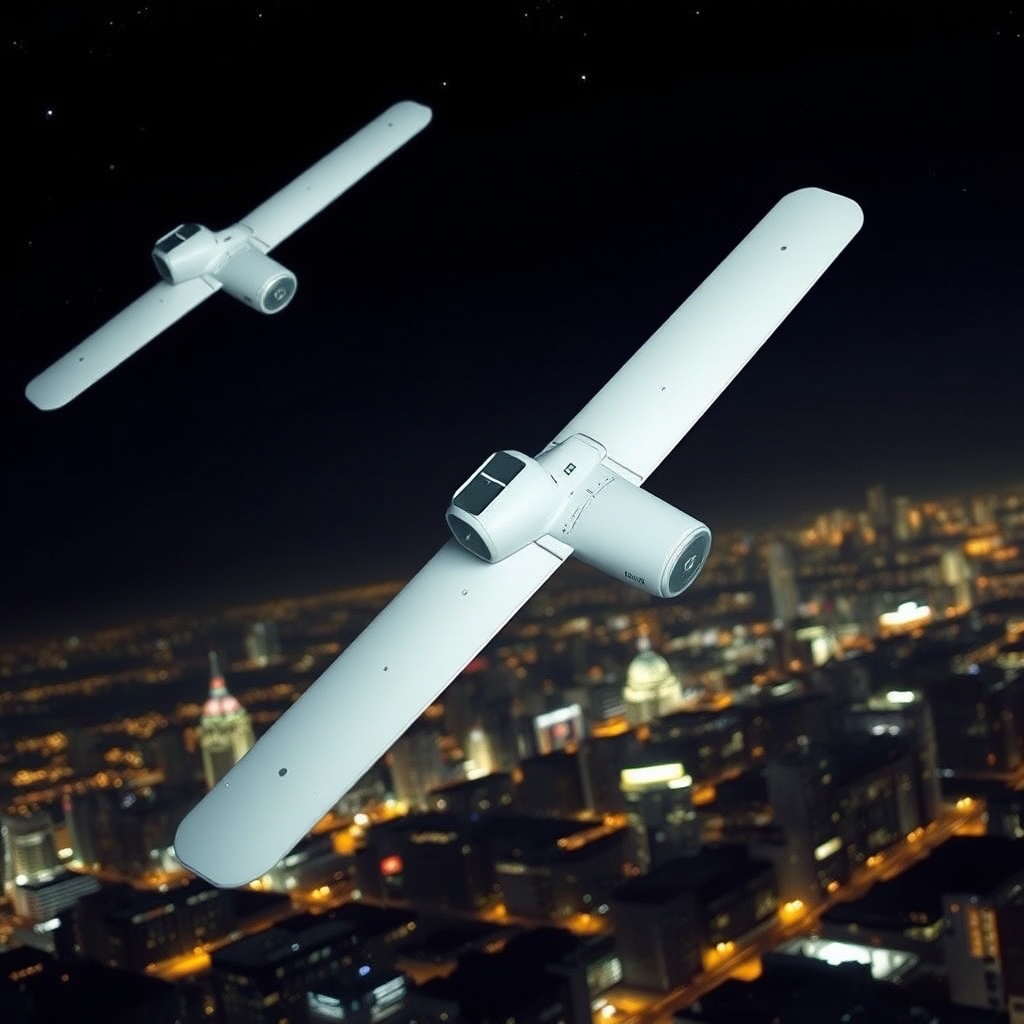
On 10 July 2026 a split‑screen image of Earth was released showing a tiny dark object drifting over the Indonesian archipelago. The object is the Occulter spacecraft of ESA’s Proba‑3 mission, deliberately placed in front of the planet to stay out of view while the wide‑angle camera on board captures the scene. The image illustrates how two satellites can work together at a distance of just 147 m – a distance short enough to be measured in a single breath, but long enough to keep the coronagraph’s instruments safely away from Earth’s reflected light.
The two‑part design of Proba‑3
Proba‑3 consists of a Coronagraph and an Occulter. The Coronagraph points at the Sun and blocks its bright disk so that the faint outer atmosphere, the corona, can be photographed. The Occulter sits in front of the Coronagraph and blocks the Sun’s light before it reaches the Coronagraph’s optics. To keep the alignment precise, the Occulter carries two cameras:
- Wide‑Angle Camera (WAC) – looks outward, tracks flashing LEDs mounted on the Coronagraph, and provides coarse position data.
- Narrow‑Angle Camera (NAC) – looks at the same LEDs but with a tighter field of view, giving fine‑grained adjustments.
During the routine maneuver shown in the image, the two spacecraft moved from a safe‑orbit configuration to a 147 m separation, ready for scientific observations.
Formation flying in context
Formation flying is not new for ESA. The PROBA‑2 mission, launched in 2009, demonstrated basic two‑satellite pointing, but its distance was only a few metres and it did not require the kind of optical blocking that Proba‑3 needs. The LISA Pathfinder (2015‑2017) tested drag‑free control for a future gravitational‑wave detector, but that mission involved a single spacecraft with test masses, not two separate satellites.
What sets Proba‑3 apart is the combination of optical occulation and sub‑hundred‑metre precision. Other agencies have proposed similar concepts (e.g., NASA’s Starshade for exoplanet imaging), but those designs keep the occulter tens of kilometres away, far larger than Proba‑3’s modest baseline.
| Feature | PROBA‑3 | Earlier ESA missions |
|---|---|---|
| Distance between spacecraft | 147 m (planned) | A few metres (PROBA‑2) |
| Primary purpose | Solar corona imaging via occulation | Technology demonstration (PROBA‑2) |
| Camera system on occulter | Wide‑Angle + Narrow‑Angle for LED tracking | Single camera (PROBA‑2) |
| Autonomous position control | Yes, using LED feedback | Limited, manual adjustments |
What the image tells us about the technology
The monochrome side of the picture is exactly what the WAC recorded; the coloured side was processed by the Royal Observatory of Belgium to make the spacecraft more visible. The fact that the Occulter’s camera can capture a clear Earth view while simultaneously tracking the Coronagraph’s LEDs shows the dual‑use nature of the sensor suite. In practice this means that the same hardware used for formation‑flight control can double as an Earth‑observation instrument when the geometry is favourable.
The image also reveals the trade‑off inherent in the design. A larger occulter would block more sunlight and provide a cleaner view of the corona, but it would also be heavier and harder to maneuver precisely. By keeping the occulter small and close, Proba‑3 reduces launch mass and fuel consumption, but it demands a very accurate LED‑based tracking system to avoid even a few centimetre drift, which would blur the solar images.
Why it matters for future missions
The success of Proba‑3’s formation‑flying control loop will be a benchmark for missions that need to keep a shield in line with a telescope, such as the Starshade‑LUCY concept for direct exoplanet imaging. If the LED‑based coarse‑fine approach proves reliable, future designers may opt for a similar two‑camera system rather than more complex laser‑ranging setups.
Space agencies planning large‑baseline interferometers (e.g., the proposed LISA‑like gravitational‑wave detector) will watch Proba‑3 closely. The ability to maintain sub‑metre alignment over 100 m distances with autonomous onboard sensors could lower the risk profile for missions that require kilometre‑scale formations.
What to watch next
- Operational updates – ESA will publish the next set of formation‑flight test results, including any drift corrections made by the NAC.
- Scientific data releases – Early solar‑corona images will show whether the occulter‑coronagraph pair achieves the expected contrast improvement.
- Technology transfer – Keep an eye on any announcements that the WAC/NAC system is being offered for commercial Earth‑observation or defence satellites.
- Future missions – Follow the development of the Starshade concept, which may cite Proba‑3’s camera‑LED approach as a design reference.
How you can follow the story today
Visit ESA’s Proba‑3 page and use the interactive slider to toggle between the monochrome and coloured views. Sign up for the ESA newsletter to receive alerts when new formation‑flight videos are posted. If you are an amateur astronomer with a modest telescope, consider joining the SpaceWatch forum where enthusiasts share live updates on satellite maneuvers; the forum often posts real‑time links to ESA’s live feeds during critical maneuvers.