PLATO’s electronics cleared for space: what the test means
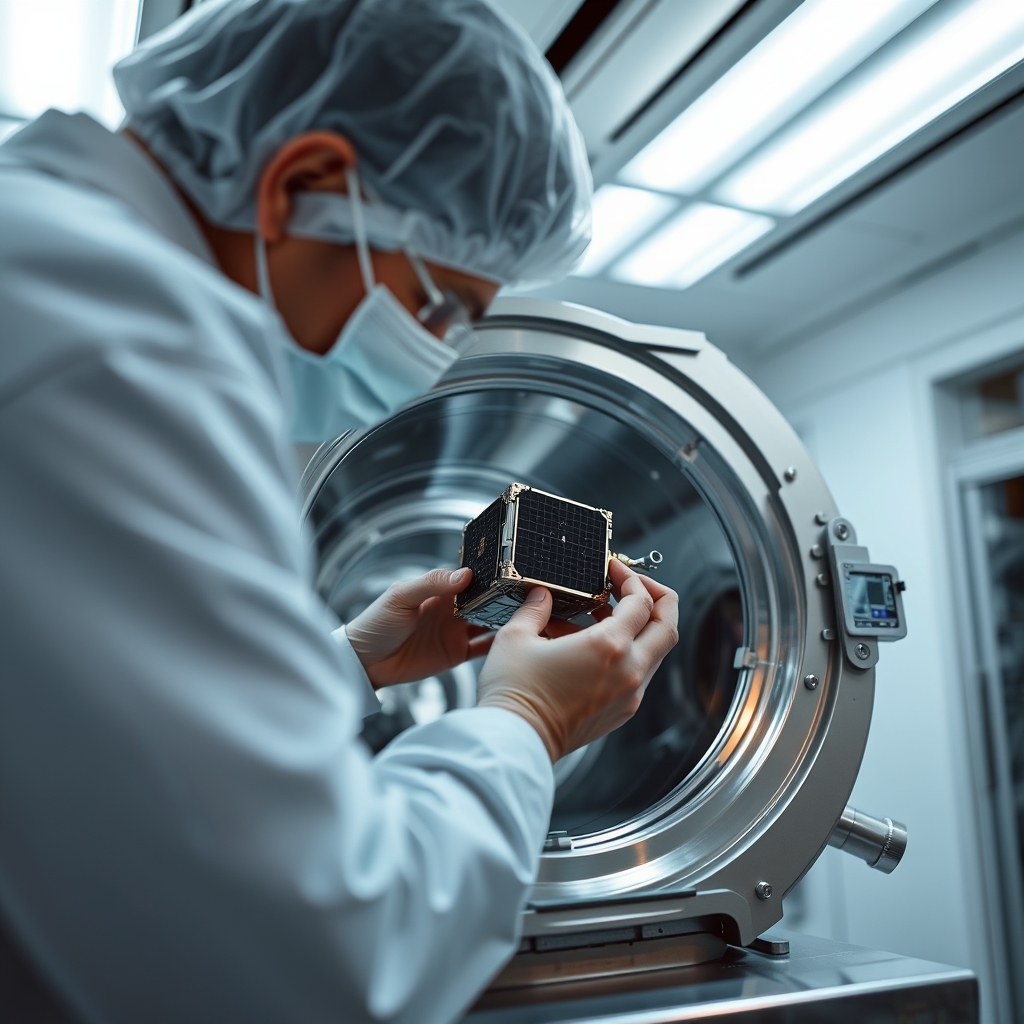
The European Space Agency has confirmed that the PLATO spacecraft’s electronics passed a decisive electromagnetic compatibility test. The test took place in the Maxwell Test Chamber at ESTEC, proving the hardware can operate in the vacuum of space without interfering with itself. Clearing this hurdle puts the mission on track for its March 2027 launch on an Ariane 6 rocket.
According to ESA Space Engineering & Technology, the chamber’s metal walls, floor and ceiling form a Faraday cage that blocks external electromagnetic fields, while rows of foam spikes line the interior to absorb stray signals and acoustic noise. Once sealed, engineers switched on PLATO’s equipment remotely and ran a battery of checks for crosstalk – unwanted electrical coupling between subsystems.
The Maxwell Test Chamber: a synthetic space environment
The chamber mimics two key aspects of the space environment. First, the Faraday cage creates an electrically quiet space, removing the background radio‑frequency noise that would otherwise mask subtle inter‑module interactions. Second, the foam spikes act like the void of space, damping vibrations and sound that could travel through the spacecraft structure on Earth. By reproducing these conditions, the test reveals how the electronics will behave once the craft leaves the atmosphere.
Qualification test timeline
PLATO’s path to launch has been a series of increasingly realistic stress tests. Each phase targeted a different threat that could jeopardise the mission’s scientific goals.
| Test phase | Simulated environment | Primary objective | Approx. duration |
|---|---|---|---|
| Vibration & acoustic (Jan 2026) | Launch‑induced shaking and roar | Verify mechanical integrity of structures and wiring | Several days |
| Large Space Simulator (Feb‑Mar 2026) | Near‑vacuum, thermal extremes | Demonstrate survivability of thermal‑control systems and materials | 1 month |
| Maxwell Test Chamber (Jul 2026) | Electromagnetically quiet vacuum | Confirm electromagnetic compatibility of all electronic modules | Few days |
The sequence moves from gross mechanical loads to fine‑grained electrical interactions, mirroring the order in which a spacecraft experiences these stresses during a real mission.
Why electromagnetic compatibility matters for PLATO
PLATO will carry a suite of ultra‑precise photometers to monitor the brightness of thousands of stars. Those detectors need a stable power supply and clean signal paths. If one instrument generates stray radio waves, it can corrupt the data stream of another, creating false planet‑transit signals or masking real ones. The Maxwell test proved that the spacecraft’s power converters, data‑handling units, and communication antennas coexist without generating measurable crosstalk. In practice this usually means the mission can trust its raw light curves and focus on the science rather than on post‑flight data cleaning.
The hidden trade‑off: schedule versus risk
Clearing the electromagnetic compatibility test is a milestone, but it also exposes a subtle trade‑off. Running the test in a dedicated chamber costs millions of euros and ties up the facility for several days, delaying other programs. On the other hand, skipping or abbreviating the test would save time now but raise the risk of in‑orbit failures that could cost the entire mission. ESA’s decision to complete the full suite of tests reflects a risk‑averse philosophy: invest upfront to protect the multi‑year scientific return. The downside is a tighter launch window; any failure now would push the Ariane 6 slot back, potentially increasing launch costs and delaying data delivery to the exoplanet community.
What to watch next
The next concrete step is integration of PLATO onto the Ariane 6 launch vehicle, scheduled for March 2027. Keep an eye on Arianespace’s manifest updates – a slip in the launch slot would ripple through the European exoplanet research calendar. After launch, the spacecraft will enter a halo orbit around the L2 Lagrange point, where it will begin its three‑year survey of bright stars. For citizen scientists, the PLATO data will eventually be released through the ESA Science Archive, offering an opportunity to contribute to planet‑finding projects.
Practical tip for enthusiasts
If you follow exoplanet news, set up an alert for “PLATO launch” on the ESA website or on major astronomy forums. The mission will publish regular status reports; reading those will give you a front‑row seat to the engineering challenges and scientific breakthroughs as they happen.