NGC 4698: A Spiral Galaxy With a Perpendicular Bulge
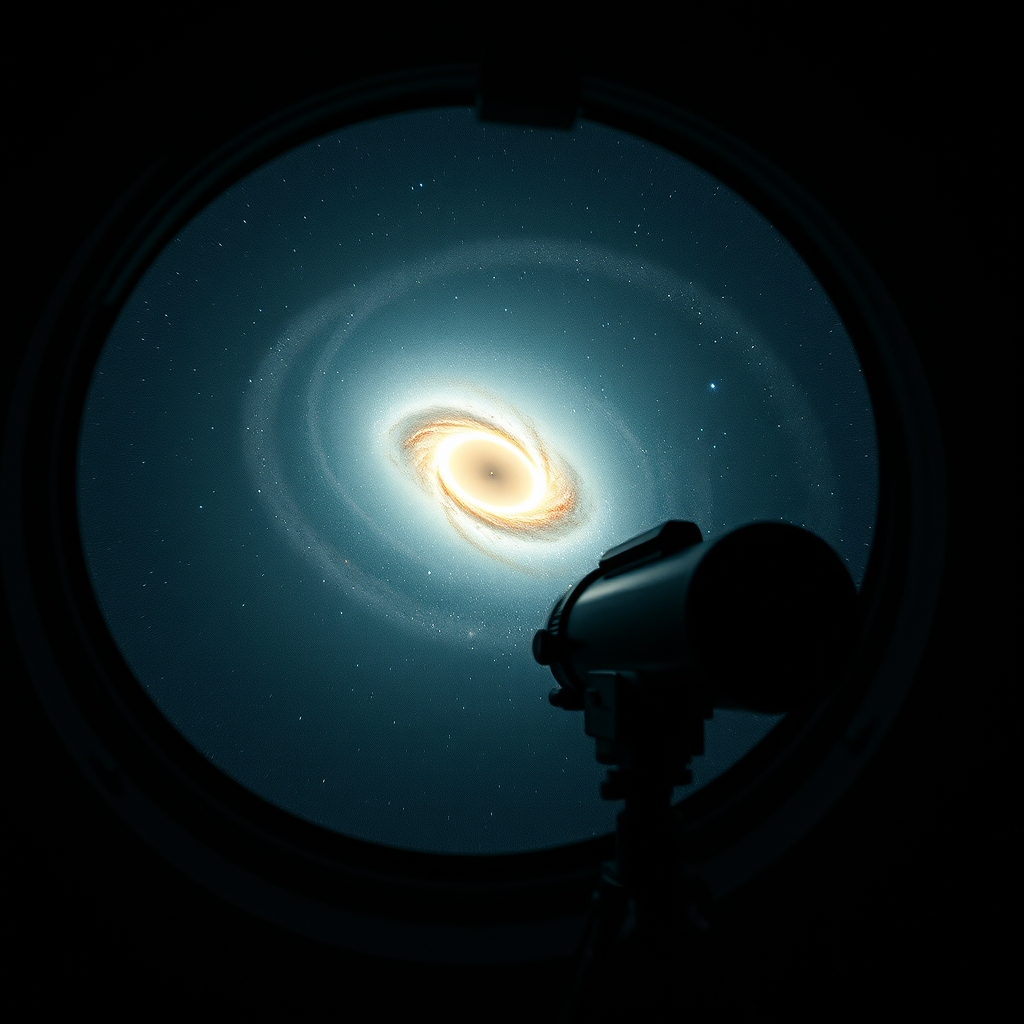
Lead – A new Hubble image shows that spiral galaxy NGC 4698, 55 million light‑years away in Virgo, hosts a central bulge that spins at right angles to its outer disc. The odd orientation points to an external disturbance, likely a minor merger, and offers a rare glimpse of how galaxies grow through cosmic “traffic jams”.
A sideways bulge: what makes NGC 4698 odd
NGC 4698 looks at first glance like a classic spiral: a thin, dusty disc of young blue stars, winding arms, and an older, off‑white bulge at the centre. What sets it apart is that the bulge extends above and below the disc and its stars and gas rotate perpendicular to the rest of the galaxy. In most spirals the bulge and disc share the same rotation axis, so the misalignment is immediately noticeable in Hubble’s high‑resolution view.
How an external gas stream can tilt a galaxy’s core
According to ESA Space Science, the likely cause is gas accreted from outside the galaxy. When a stream of intergalactic gas or a small companion galaxy falls in at an angle, it can settle into a new, inclined disc around the central supermassive black hole. Over time, stars form within this inner disc, inheriting its tilted rotation. A short “tail” of hydrogen seen on one side of NGC 4698 supports the idea of a recent minor merger that delivered the misaligned material.
Comparison: Normal spiral vs NGC 4698
| Feature | Typical Spiral Galaxy (e.g., Milky Way) | NGC 4698 |
|---|---|---|
| Disc‑bulge alignment | Co‑rotating, same axis | Bulge rotates 90° relative to disc |
| Bulge shape | Spheroidal, embedded in disc | Elongated, extends above/below disc |
| Gas inflow history | Mostly smooth accretion | Evidence of tilted gas inflow & minor merger |
| Star‑formation pattern | Blue stars in arms, older stars in centre | Same outer‑disc pattern, but inner disc stars share tilted orbit |
What the misaligned core tells us about galaxy evolution (analysis)
The tilted bulge is not just a visual curiosity; it is a forensic record of a past interaction. The trade‑off here is that while the outer disc retains its original angular momentum, the inner region resets to a new spin direction, creating two dynamically distinct components. In practice this means the galaxy can host two separate reservoirs of gas, each feeding star formation and the central black hole on different planes. Over billions of years the gravitational torques between the two components may damp the misalignment, but if further accretion events occur the tilt can persist or even be amplified. For astronomers, NGC 4698 provides a natural laboratory to test models of how minor mergers reshape the angular momentum budget of galaxies.
Watching the Virgo Cluster for more out‑of‑sync galaxies (advice)
If you want to keep an eye on similar discoveries, follow the ESA/Hubble observing programme #18103 (PI: Thilker) that surveys Virgo‑cluster members. Amateur astronomers with medium‑size telescopes can join citizen‑science platforms such as Zooniverse’s “Galaxy Zoo” to flag galaxies that show odd bulge orientations. Professional researchers should compare kinematic maps (velocity fields) of inner versus outer regions to quantify any tilt, then cross‑reference with neutral‑hydrogen (HI) surveys that reveal tidal tails. Spotting more misaligned systems will refine estimates of how frequently minor mergers rewire galactic spin.
How to explore NGC 4698 yourself today
- Visit the ESA Hubble website and download the high‑resolution image of NGC 4698.
- Use a free tool like Aladin Lite to overlay the image with HI contour maps from the VLA (Very Large Array) public archive – the tail of hydrogen should be visible.
- Compare the orientation of the central bulge with the outer disc by drawing a simple line across each component; the 90° angle is the key clue.
- Share your annotated image on social media with the hashtag #TiltedBulge to help spread awareness of these rare galactic configurations.