MIRROR robot demonstrates the path to building structures in space
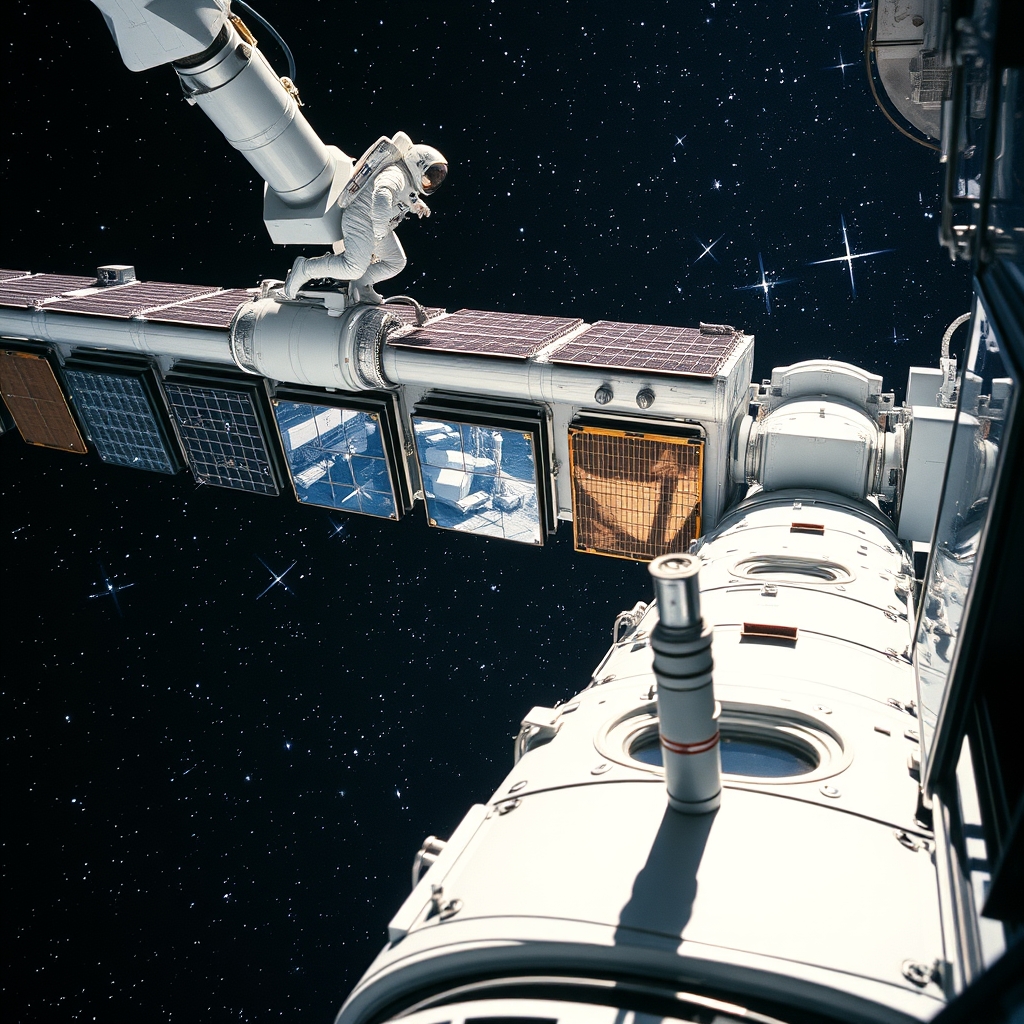
According to ESA Space Engineering & Technology, a multi‑arm robot called MARIO crawled across a laboratory test‑bed, attaching beams one after another to form a growing truss. The short clip illustrates a practical step toward constructing huge structures directly in orbit, something that could make future missions more flexible and less dependent on launch‑vehicle size limits.
How the MARIO robot works
MARIO has three arms. Two arms act like legs, letting the robot walk across a weightless frame; the third arm reaches out to pick up a beam, align it with a connector, and lock it in place. When the robot pauses, a second arm can point a camera at the joint, giving the onboard vision system a clearer view for precise manipulation. The robot repeats this cycle, adding one beam at a time, until a skeletal scaffold – technically a "truss" – emerges. In a real‑space environment, the same motions would rely on reaction‑control thrusters or magnetic anchoring instead of a lab’s air‑bearing platform, but the basic kinematics remain the same.
The three ESA activities behind the demo
| Activity | Goal | Current focus |
|---|---|---|
| MIRROR | Show that multi‑arm robots can walk and assemble in micro‑gravity. | Lab demonstrations with MARIO and similar prototypes. |
| ISAAC (In‑Space Assembly and Construction) | Validate that loose beams and connectors can be stored, deployed and joined in orbit. | Testing beam‑connector designs and autonomous linking procedures. |
| RISE (Robotic Interfaces and tooling for Space‑Based Solar Power Engineering) | Provide the end‑to‑end tooling needed for large solar‑power satellites. | Integrating robotic end‑effectors with power‑generation modules. |
The table makes clear that each activity tackles a different layer of the problem: mobility, structural parts, and power‑system integration.
Why in‑orbit assembly matters now
Large antennas, reflector dishes, and solar‑power stations are too big to fit inside a typical launch fairing. If they can be built piece by piece after launch, a single rocket could deliver many smaller payloads that later become a single functional system. This approach reduces the cost per kilogram of payload and opens the door to missions that need apertures or collector areas far larger than current spacecraft can carry.
Trade‑offs and practical limits (Analysis)
The obvious benefit is size flexibility, but the trade‑off is complexity. Autonomous robots must handle many failure modes: mis‑aligned connectors, debris impacts, or unexpected thermal expansion. Each extra moving part adds mass and power consumption, which in turn raises launch cost. In practice this usually means that early missions will target modest structures – perhaps a 10‑meter antenna or a 5‑meter solar panel – before scaling up to kilometre‑scale solar farms. The key risk is that a single point of failure could halt construction, leaving a partially built structure that offers little utility. Monitoring robot health, redundancy in gripping mechanisms, and the ability to replace faulty arms from a service vehicle are all aspects that will need close attention.
Who stands to gain and who may be left behind
Satellite manufacturers that can offer modular payloads will benefit, as they can sell smaller, cheaper launch slots while promising a larger final system. Governments planning lunar or Martian habitats may also use the same technology to erect habitats before crews arrive. Conversely, companies that rely on monolithic launch‑ready hardware may see their market shrink unless they adapt to a hybrid approach that mixes pre‑assembled and in‑orbit‑built components.
What to watch next
ESA plans to move from lab tests to a flight demonstration of the ISAAC concept within the next two years. Keep an eye on announcements from the European Space Agency’s Small Satellite Programme, as they often bundle robotic payloads with rideshare missions. Follow the progress of the RISE activity, which will reveal the specific tools needed to connect solar‑panel arrays – a critical step if space‑based solar power becomes viable.
Practical steps you can take today
If you are a student or early‑career engineer, look for open‑source simulation kits that model multi‑arm robots in micro‑gravity; many university labs share their code on GitHub. For hobbyists, building a simple 3‑D‑printed arm and testing it on a low‑friction air‑bearing table can give a feel for the alignment challenges described above. Finally, subscribe to ESA’s public newsletters to receive updates on upcoming flight tests and opportunities to contribute to data‑analysis challenges.