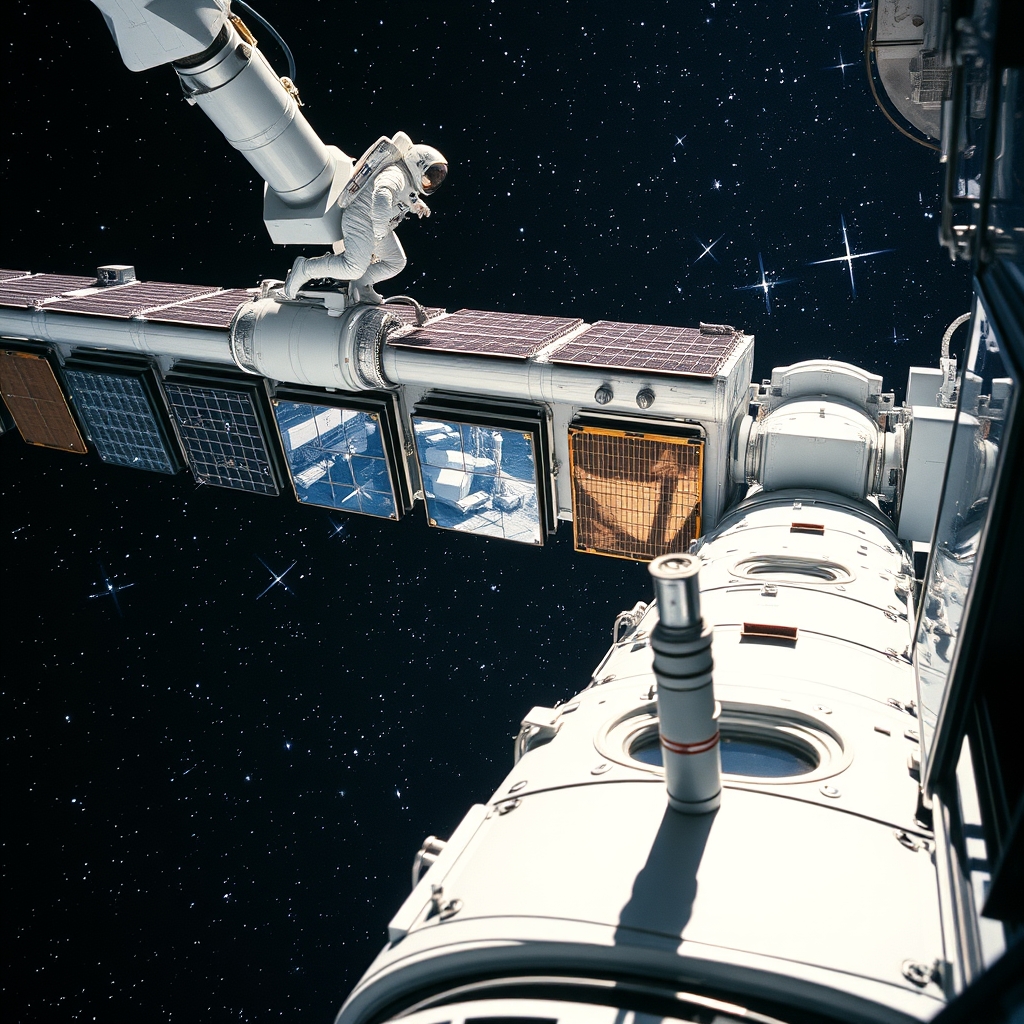
ESA Demonstrates Interoperable Rendezvous and Docking for In‑Space Logistics
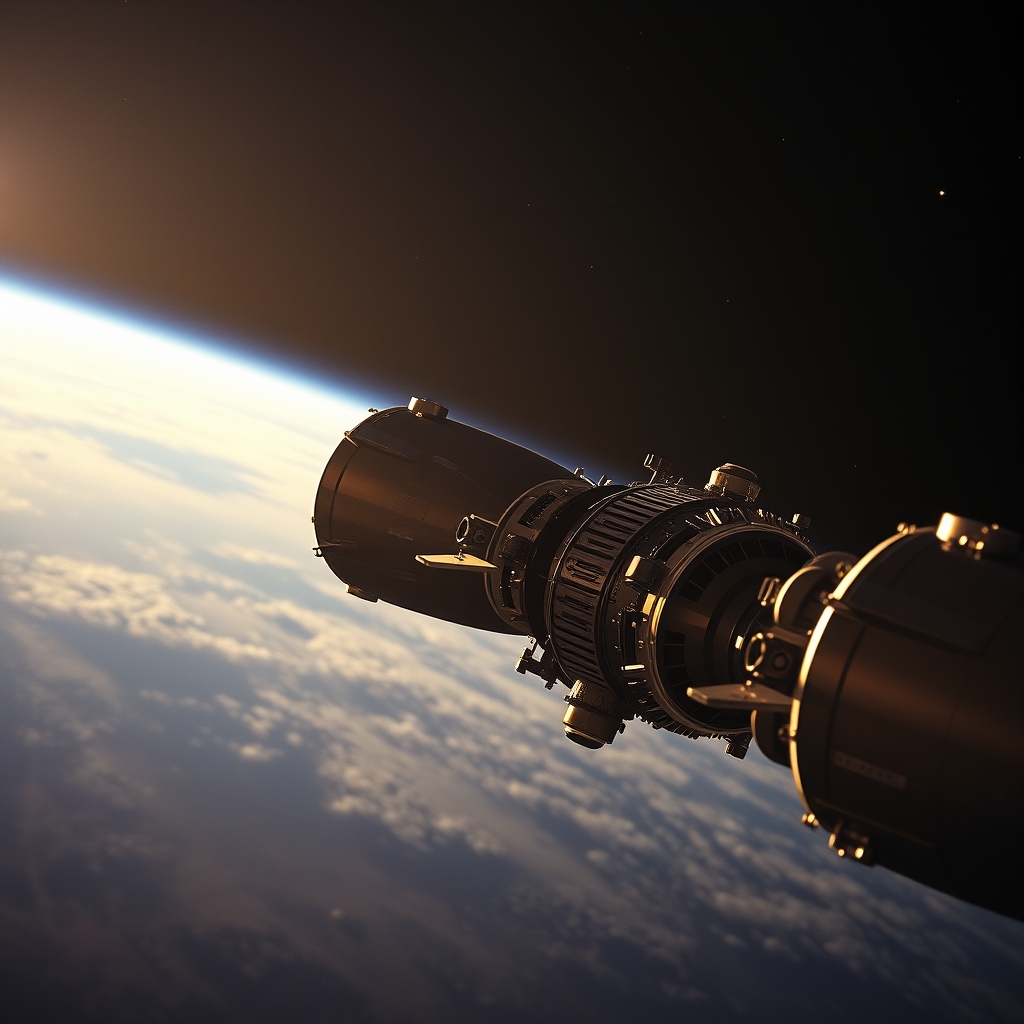
According to ESA Space Engineering & Technology, a series of laboratory experiments at ESTEC proved that a servicing spacecraft can locate, approach and dock with a client vehicle using standardized camera‑based navigation and air‑bearing docking platforms. The demonstration is a concrete milestone toward the vision of orbital “logistics hubs” where satellites are repaired, refueled or repurposed instead of being discarded after a single mission.
The test set‑up: from vision to hardware
The rendezvous test used the Guidance, Navigation and Control Laboratory’s GRALS system – two robotic arms mounted on 33‑metre rails. One arm carried a navigation unit built by The Exploration Company, while the opposite arm held a scale model of a client spacecraft supplied by Thales Alenia Space. Both models hung in a dark chamber illuminated by a single lamp to mimic the Sun’s glare.
The navigation unit’s camera tracked a pattern of black‑and‑white markers that look like QR codes. By locking onto these markers, the system could determine its relative position and orientation with centimetre precision, even when the markers were flooded with reflected sunlight. Two separate camera concepts were evaluated, but the source does not disclose which performed better.
Docking was simulated in ESA’s Orbital Robotics Laboratory. Here, each spacecraft model sat on a platform that floats on a micrometre‑scale air cushion, reproducing the frictionless environment of orbit in two dimensions. The servicer platform weighed about 180 kg, with an extra 20 kg added on each side to match the client’s mass, reproducing realistic inertia differences.
Starting from a separation of 4 cm, the servicer’s docking mechanism first latched onto a passive capture interface on the client. Then it closed the gap until two ports – one for fluid transfer and another for power‑and‑data – aligned and coupled.
Why a standard matters: the problem with one‑shot satellites
Current satellites launch with enough propellant to complete a single mission. Once the fuel runs out, the craft either deorbits and burns up or becomes space debris, crowding valuable orbital slots. Without a common docking interface, each manufacturer would need a bespoke servicing vehicle, driving up cost and complexity.
A shared interface, like the one tested under ESA’s In‑Space Proof of Concept (InSPoC‑1) programme, would let any qualified service craft approach and attach to any client that carries the compatible hardware. This openness mirrors how airports work on Earth: airlines of different makes can use the same runway and gate.
Comparison of the two camera‑based navigation concepts
| Feature | Concept A | Concept B |
|---|---|---|
| Marker detection method | Black‑and‑white QR‑like pattern | Not specified |
| Performance in bright‑sun glare | Tested successfully | Not disclosed |
| Integration with servicer navigation unit | Direct feed to GRALS controller | Not disclosed |
| Development partner | The Exploration Company | Not disclosed |
The source does not give detailed performance numbers, so the table reflects only the attributes that are explicitly mentioned.
The trade‑off nobody spells out
Adding a docking port and the associated navigation hardware inevitably increases a satellite’s dry mass. The extra mass reduces the payload capacity of the launch vehicle or requires more fuel for orbit insertion, raising launch costs. At the same time, the benefit is a potential multi‑year extension of the satellite’s operational life, which can offset the initial expense if the servicing market matures.
Another hidden cost is the need for precise relative‑velocity control during the final centimetre‑scale approach. Even a small mis‑alignment can damage the capture mechanism, turning a repair mission into a debris‑creation event. The laboratory tests showed the system works under “multiple dynamic conditions,” but real‑world orbital debris, varying illumination, and thermal distortion will add complexity.
Who stands to gain and who may lose
- Satellite operators that adopt the standard can expect longer mission durations, lower total cost of ownership, and the ability to upgrade payloads in orbit.
- Service‑craft providers gain a market for on‑orbit refuelling, repair and repurposing, similar to aircraft maintenance firms.
- Launch providers could see reduced demand for disposable satellites, but may also benefit from higher‑value payloads that carry the extra hardware.
- Manufacturers that lock into proprietary docking solutions may find their market share shrinking if the ESA‑driven standard becomes de‑facto.
What to watch next: the path from lab to orbit
The next logical step is a flight demonstration of the same interfaces on an operational servicing mission. ESA’s upcoming Cat mission, which will rendezvous with a satellite equipped with a compatible Mice interface, will test the concept in the harsh environment of low‑Earth orbit. Observers should monitor:
- Whether the camera‑based navigation can cope with real solar glare and Earth albedo.
- The reliability of the air‑bearing‑style docking mechanism when translated to magnetic or mechanical capture in micro‑gravity.
- How quickly commercial service providers can field a vehicle that meets the InSPoC specifications.
Stakeholders interested in the emerging orbital logistics market should start by mapping their existing satellite designs against the InSPoC‑1 interface requirements. If a redesign is needed, plan for the additional mass early in the development cycle to avoid costly retrofits later. Meanwhile, companies developing navigation cameras, docking latches or fluid‑transfer connectors can position themselves as qualified suppliers by aligning their products with the standards demonstrated in ESA’s tests.