Listening to the Cosmos: ESA’s Expedition Sound Brings Space Data to Your Ears
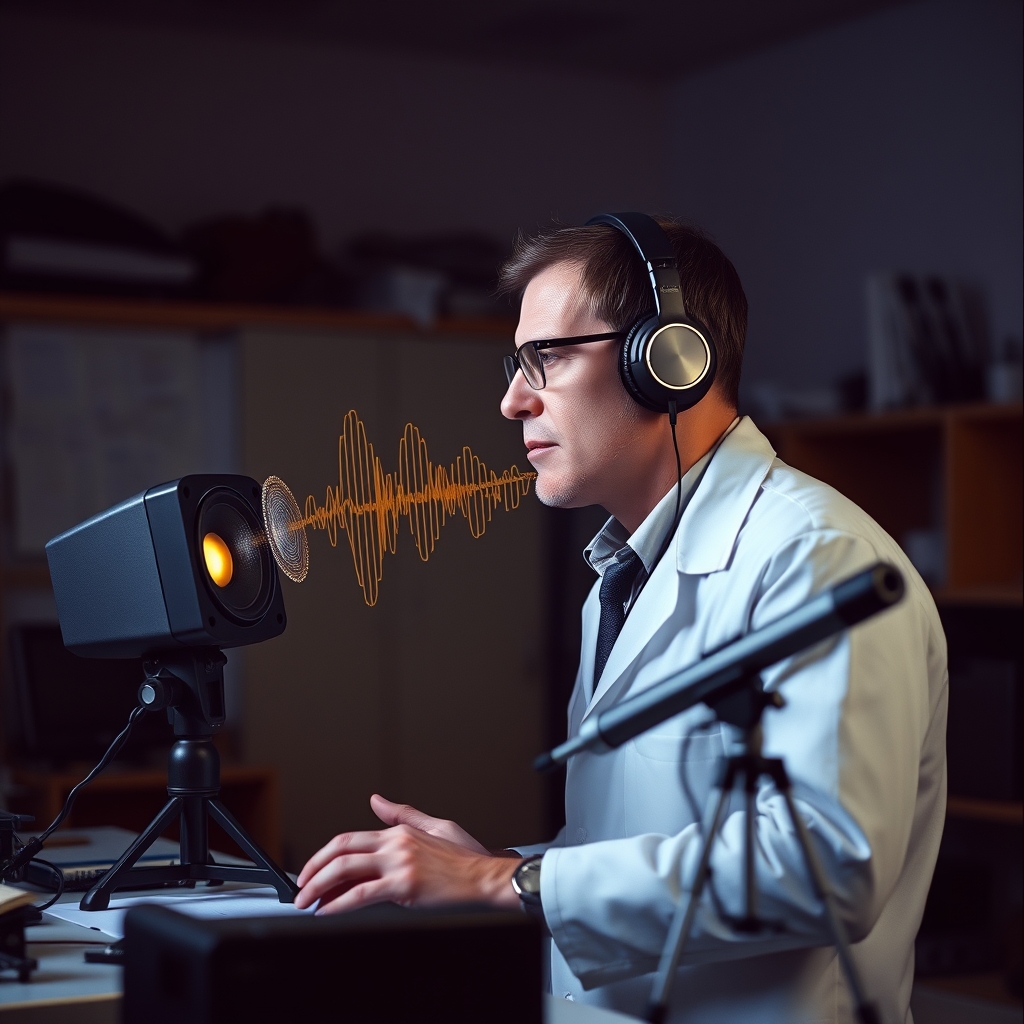
According to ESA Space Science, the European Space Agency has launched Expedition Sound, a podcast series that turns raw data from its space missions into music‑like audio. By letting listeners travel from the Sun to distant galaxies through sound, the show tries to make complex astronomy reachable for anyone, especially people with visual impairments.
From Sun to Mercury: Solar Orbiter and BepiColombo in Audio
The first episodes use sonifications created from the Solar Orbiter and BepiColombo missions. A sonification is a direct translation of numbers—like magnetic field strength or particle velocity—into pitch, rhythm, or timbre, so the data can be heard instead of plotted. In the Solar Orbiter segment, variations in solar wind speed become rising and falling tones that mimic the Sun’s “breathing.” For BepiColombo, the spacecraft’s trajectory toward Mercury is rendered as a steadily accelerating glide, letting listeners feel what a probe might sound like as it dives toward the planet’s scorching surface.
Stars That Speak: Gaia’s Starquakes and the Search for Exoplanets
A later episode focuses on ESA’s Gaia mission, which measures the tiny flickers of stars caused by internal vibrations called starquakes. Those vibrations are turned into rhythmic pulses, giving each star a distinct heartbeat. The podcast also covers the PLATO mission, which watches distant stars for the tiny dimming that signals an exoplanet passing in front. In the audio version, each dip becomes a soft thump, allowing listeners to sense the presence of worlds that are otherwise invisible.
Gravity’s Song: Euclid’s Einstein Rings and LISA’s Future
Einstein rings—circular images formed when a massive object bends light from a background galaxy—are the focus of the Euclid‑inspired episode. By mapping the degree of bending onto pitch, the sonification creates a low, resonant hum that grows louder as the lensing effect strengthens. The episode also hints at ESA’s upcoming LISA mission, a space‑based gravitational‑wave detector. While LISA data are not yet released, the podcast imagines how ripples in spacetime could be heard as subtle, long‑duration tones.
The Accessibility Angle: How Sound Opens Space to Blind Researchers
A recurring theme is the role of sound in making astronomy inclusive. Blind astronomer Nic Bonne explains that listening to data lets her “feel” the same patterns sighted colleagues see in graphs. Vision‑impaired student Ben Ruggles describes using audio software to identify planetary transits, turning a visual light curve into a sequence of beeps he can analyze. By foregrounding these experiences, the series demonstrates that sonification is more than a novelty; it is a practical research tool for a broader community.
What the Audio Turn Means for Astronomy
Trade‑offs and the Path Ahead
The biggest advantage of turning data into sound is accessibility. Anyone with a pair of headphones can explore a mission’s findings without needing a screen, and patterns that are hard to spot visually may become obvious auditorily. However, the approach also introduces a trade‑off: audio compression inevitably reduces the dimensionality of the original dataset. A complex spectrum of X‑ray energies, for example, might be mapped to a single pitch range, potentially hiding subtle variations that a scientist would catch in a full graph. In practice this means researchers must decide which variables are most informative before they commit to a sonification.
Another hidden catch is audience reach. While podcasts are popular, they compete with a flood of other audio content, so the series relies on discovery through platform algorithms or word of mouth. The real impact will depend on how often educators and research groups integrate the episodes into curricula or outreach events.
Looking forward, the next step is likely to combine sonification with visualisation, creating multimodal displays where sound reinforces what a graph shows. If ESA pairs each episode with an interactive web tool that lets listeners isolate specific data streams, the educational value could multiply. Scientists should watch for any studies that measure whether blind researchers can extract quantitative results from sonified data as accurately as sighted peers—those results will tell whether the method can move from outreach to mainstream analysis.
Quick Comparison of Missions Featured
| Mission | Primary Data Type | What Was Sonified | Podcast Destination |
|---|---|---|---|
| Solar Orbiter | Solar wind speed, magnetic fields | Pitch‑based tones representing wind variations | The Sun |
| BepiColombo | Spacecraft velocity, trajectory | Accelerating glide soundscape | Mercury |
| Gaia | Stellar oscillation frequencies | Rhythmic heartbeats of stars | Milky Way stars |
| PLATO (planned) | Light curves of stars | Thumps for planetary transits | Exoplanet systems |
| Euclid | Gravitational lensing strength | Low, resonant hum for Einstein rings | Distant galaxies |
| LISA (future) | Gravitational‑wave strain | Long‑duration tones (conceptual) | Space‑time ripples |
How to Start Listening and Using Sonification Today
- Subscribe to Expedition Sound on your favorite platform—Apple Podcasts, Spotify, or Amazon Music are all supported.
- Pick an episode that matches a topic you’re curious about, then pause and note the recurring sounds; try to match them to the described data (e.g., rising pitch = increasing solar wind).
- If you teach or mentor, share the episode with students and ask them to sketch a graph based on what they hear; compare the sketch to the mission’s published plots.
- Explore free sonification tools such as AudioMoth or Sonify (open‑source on GitHub) to experiment with your own astronomy datasets.
- Follow ESA’s social channels for updates on new episodes and any accompanying interactive visualisations.
By turning numbers into notes, ESA is widening the door to the cosmos. The next time you hear a faint hum of a distant galaxy, remember it is not just a sound effect—it is a data‑driven invitation to explore the universe in a new way.