Europe’s August 12, 2026 Total Solar Eclipse: Live from Javalambre Observatory
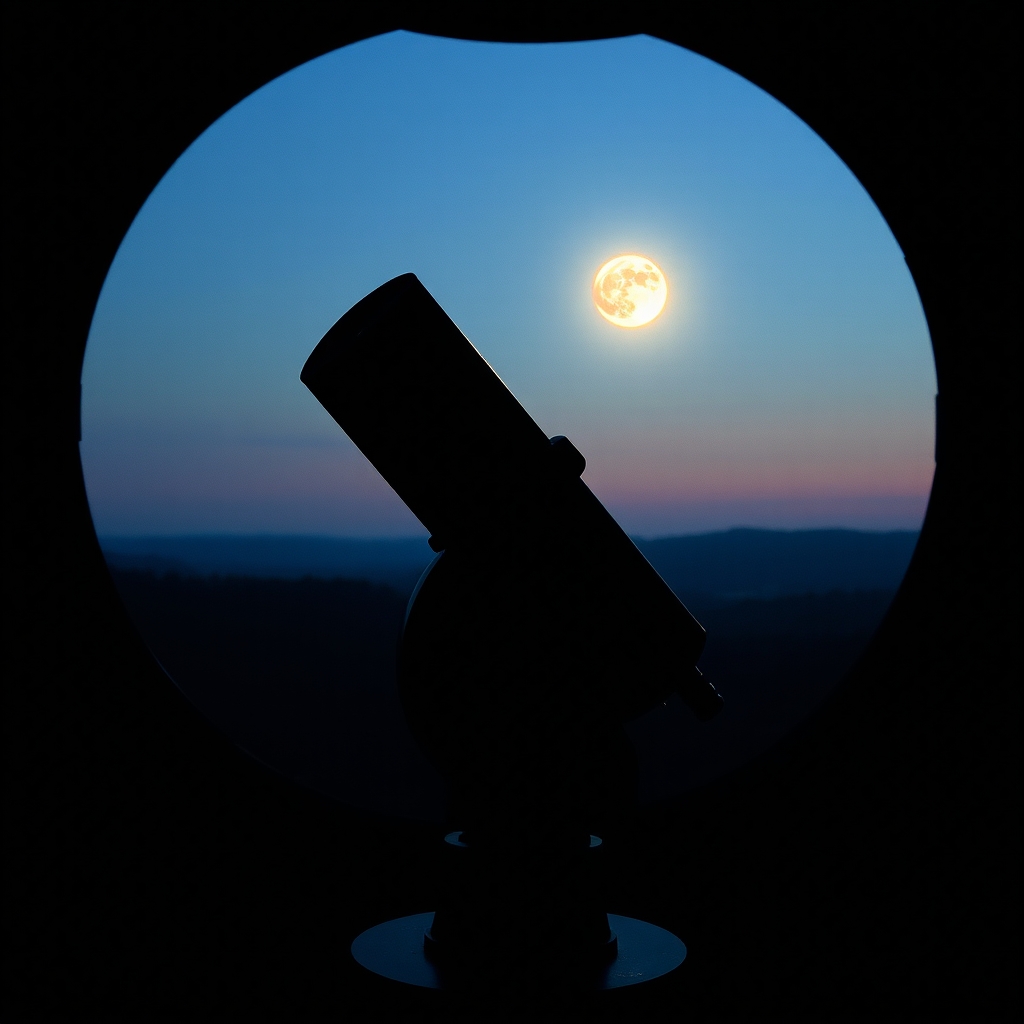
According to ESA Space Science, a live broadcast from the Observatorio Astrofísico de Javalambre in Spain captured the total solar eclipse that swept across Europe on 12 August 2026. The event offered a rare chance for scientists and the public to watch the Moon completely cover the Sun while experts explained why eclipses matter for solar and space‑weather research.
The eclipse footprint across Europe
The path of totality – the narrow corridor where the Sun was entirely hidden – cut through Greenland, Iceland, Spain and a small stretch of northeastern Portugal. Most of the continent saw a partial eclipse, meaning the Moon covered only a portion of the solar disc. The table below summarises the geographic distribution:
| Region | Eclipse type |
|---|---|
| Greenland | Total |
| Iceland | Total |
| Spain | Total |
| Northeastern Portugal | Total |
| Rest of Europe | Partial |
Totality lasted only a few minutes at any given spot, but the rapid plunge of daylight was dramatic enough to draw crowds from towns and cities across the affected zones. The broadcast showed the Sun’s corona – the faint, outer atmosphere normally drowned out by the Sun’s brilliance – shimmering as the Moon’s silhouette swept across the sky.
Why total solar eclipses are scientifically valuable
During a total eclipse the Moon acts as a natural occulter, blocking the Sun’s photosphere (the bright surface) and allowing instruments to record the corona without the need for artificial coronagraphs. The corona is the source of the solar wind that shapes Earth’s space‑weather environment, yet it is difficult to observe under normal conditions because its light is 10,000 times fainter than the photosphere. By studying the corona’s structure and dynamics during totality, researchers can test models of magnetic field lines, plasma heating, and particle acceleration.
Eclipses also provide a fleeting opportunity to calibrate satellite sensors. Ground‑based photometers and spectrographs can be cross‑checked against space‑borne instruments, improving the accuracy of long‑term solar monitoring. Finally, the rapid change in solar illumination affects Earth’s ionosphere, allowing scientists to probe how the upper atmosphere responds to sudden drops in solar radiation.
Javalambre Observatory’s role in the broadcast
The Observatorio Astrofísico de Javalambre sits within the path of totality, giving it an unobstructed view of the eclipse’s peak. Built for wide‑field surveys, the facility houses a 2.5‑meter telescope equipped with a high‑resolution spectrograph and fast‑readout cameras. Those tools captured the corona’s fine‑scale structures in real time, while the observatory’s data‑processing pipeline streamed calibrated images to ESA’s live feed.
Hosting the broadcast also let ESA showcase its broader space‑science programs. Dame Dr Maggie Aderin, a well‑known space scientist and communicator, guided the audience through live telescope feeds, interviews with ESA’s Director of Science Carole Mundell, and discussions on how eclipses tie into ESA missions that study the Sun, such as Solar Orbiter and the upcoming Vigil mission.
Beyond the spectacle: what the broadcast really delivers
The immediate impact of a live eclipse broadcast is obvious – millions can watch a rare celestial event from their living rooms. The deeper payoff lies in public engagement and data collection.
Public engagement vs scientific return – The broadcast attracted a broad audience, but the scientific data collected at Javalambre is limited to a few minutes of totality. That short window restricts the amount of high‑resolution corona imaging that can be performed, especially compared with dedicated solar missions that observe the Sun continuously. The trade‑off is therefore between reaching a large, non‑specialist crowd and gathering a modest dataset that still adds value by cross‑checking satellite measurements.
Who gains – Amateur astronomers, teachers, and the general public gain a vivid illustration of solar physics that textbooks cannot provide. Researchers gain a calibrated snapshot of the corona and a chance to validate atmospheric models. ESA benefits by reinforcing its public‑outreach brand and demonstrating how its missions connect to everyday sky‑watching experiences.
Who loses – Resources devoted to the live production (camera crews, transmission bandwidth, staff time) could have been allocated to longer‑term ground‑based solar campaigns. Smaller observatories outside the path of totality miss the chance for direct involvement, which can widen the gap between well‑funded facilities and regional groups.
What to watch next – ESA has already announced eclipse‑related activities for 2027 and 2028, targeting other parts of Europe. Keeping an eye on those announcements will reveal whether ESA plans to repeat the Javalambre model or shift toward distributed networks of smaller telescopes that can capture partial phases across a broader area.
How to follow upcoming eclipses and stay involved
If you want to turn today’s excitement into a longer‑term habit, start by signing up for ESA’s newsletter or following its social‑media channels for alerts about future eclipses. Install a free astronomy app (e.g., SkySafari, Stellarium) that sends real‑time notifications of upcoming eclipses and indicates the local visibility. For a hands‑on experience, consider joining a local astronomy club; many clubs organize viewing parties and often have portable solar filters that are safe for direct observation.
Finally, if you are a teacher or community organizer, download the ESA‑produced educational packets that accompany each eclipse broadcast. They contain lesson plans, activity sheets, and short videos that translate the science of eclipses into classroom‑friendly formats. Using those resources can help you turn a spectacular sky event into a lasting learning opportunity.