ESA awards spotlight satellite delivery excellence and a self‑healing composite breakthrough
According to ESA Space Engineering & Technology, three European space firms received the agency’s 2026 Excellence and Innovation awards at the Industry Space Days event in Noordwijk, the Netherlands. The recognition highlights how fast satellite schedules and novel materials are shaping Europe’s ability to launch affordable science missions.
Excellence award for prime contractor – Surrey Satellite Technology Limited
Surrey Satellite Technology Limited (SSTL) earned the prime‑contractor Excellence award for delivering two HydroGNSS satellites for ESA’s first Earth Observation (EO) Scout mission, part of the FutureEO programme. The award praised SSTL’s ability to keep the launch schedule after a late change in launch service. The company identified pre‑shipment issues, mobilised extra resources, and kept the mission on track – a feat ESA values because EO Scout missions aim to produce cutting‑edge data quickly and at low cost.
Excellence award for subcontractor – Sener Aeroespacial
Spanish firm Sener received the subcontractor Excellence award for its work on the MetOp Second Generation programme, a set of weather‑forecasting satellites operated by EUMETSAT. Sener supplied flight models and spares, and demonstrated flexibility when urgent instrument‑level problems arose. Their coordination across multiple activity levels helped avoid delays that could have impacted climate‑prediction data streams.
Innovation award – CompPair Technologies’ self‑healing composite
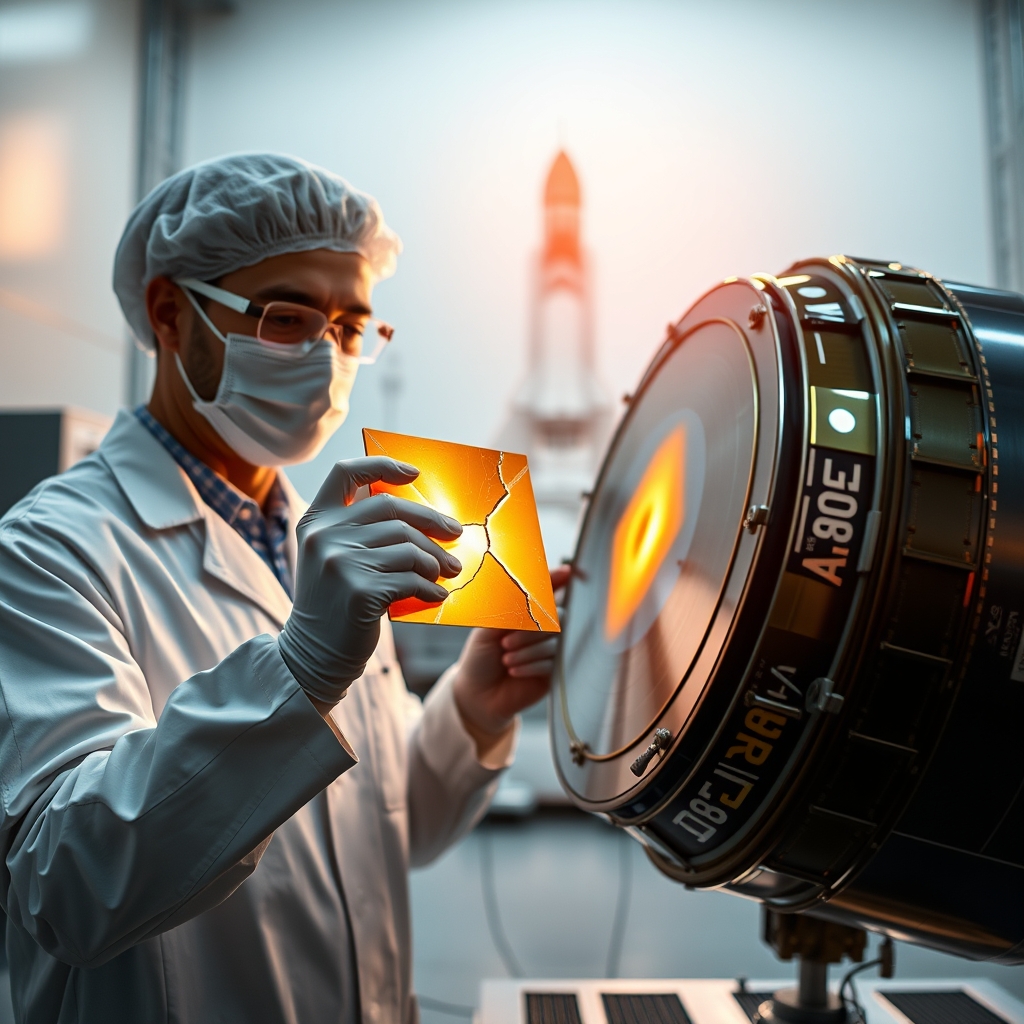
CompPair Technologies of Switzerland was honoured with the Innovation award for a composite material that can repair itself in orbit. The material embeds fibre‑optic sensors that monitor strain and temperature continuously. When a crack or micro‑fracture is detected, an array of 3D‑printed aluminium heating grids activates. The heat melts a polymer healing agent distributed throughout the matrix, allowing it to flow into the damaged zone and solidify, restoring structural integrity without human intervention. This approach could reduce maintenance costs for reusable launch vehicles and extend the service life of long‑duration spacecraft.
How the self‑healing system works (mechanism explained)
- Sensing – Fibre‑optic or piezoelectric sensors detect changes in strain that exceed a preset threshold. The data are fed to an onboard processor that localises the anomaly.
- Decision – The processor runs a simple algorithm: if the temperature is below the healing‑agent activation point, trigger the heating grids.
- Heating – The aluminium grids, produced layer‑by‑layer with a 3‑D printer, pass a controlled current that raises the local temperature to about 120 °C (the melting point of the embedded polymer).
- Healing – The polymer melts, flows into the crack, and upon cooling re‑solidifies, re‑bonding the composite fibres. The sensors then verify the restored stiffness.
The key advantage is autonomy: the system does not need ground commands to start the repair, which saves communication bandwidth and speeds recovery. The downside is added mass (sensors and heating grids) and power consumption during activation, which must be balanced against the weight savings from fewer replacement parts.
Comparison of the three award winners
| Award category | Company | Country | Core contribution |
|---|---|---|---|
| Excellence – Prime Contractor | Surrey Satellite Technology Limited | United Kingdom | Delivered HydroGNSS satellites on a tight schedule for FutureEO EO Scout mission |
| Excellence – Subcontractor | Sener Aeroespacial | Spain | Provided flight models, spares, and rapid issue resolution for MetOp‑SG weather satellites |
| Innovation | CompPair Technologies | Switzerland | Developed a self‑healing composite with embedded sensors and 3‑D‑printed heating grids |
What the awards really change – the hidden trade‑offs
The headline is that ESA now publicly celebrates fast delivery and novel materials, but the practical impact is subtler. First, the supplier performance evaluation process gains a visible reward loop: companies that meet tight schedules receive not only recognition but also a platform to pitch at the Space Tech Expo Europe 2026. This can translate into new contracts, yet it also raises the bar for smaller firms that may lack the resources to field a dedicated “award‑ready” team.
Second, the self‑healing composite introduces a new risk vector. While the technology promises lower long‑term maintenance, the added system complexity (sensors, heating circuits, power budgeting) creates more points of failure. In practice, mission planners will need to weigh the mass penalty against the potential cost saved by avoiding replacement parts. Early adopters will likely test the material on secondary payloads before committing it to flagship launchers.
Finally, the awards reinforce ESA’s strategic focus on affordable, rapid‑turnaround missions. By rewarding companies that can adapt to launch‑service changes, ESA signals that schedule flexibility is as valuable as raw technical performance. This may shift supplier bids toward more modular designs and robust risk‑mitigation plans.
What to watch next
- Follow‑up demonstrations of CompPair’s composite on upcoming ESA missions, especially any payload on the Ariane 6 reusable launcher.
- Procurement notices from ESA that cite “Excellence award” performance as a selection criterion – these will indicate whether the recognition translates into concrete contract advantages.
- Industry responses at the Space Tech Expo Europe 2026; companies often use the Expo to announce next‑generation versions of award‑winning tech.
- Feedback from EUMETSAT on the MetOp‑SG satellites; any reported improvements in data latency or reliability could highlight the value of Sener’s flexible support model.
Practical steps for engineers and managers today
- Assess your own project’s risk matrix – if schedule slips are a dominant risk, adopt modular workflows similar to SSTL’s rapid response plan.
- Prototype sensor‑embedded composites on a small scale: integrate a fibre‑optic strain gauge into a test coupon, apply a controlled crack, and verify the heating‑grid response.
- Engage with ESA’s Supplier Performance Evaluation process: request a pre‑award debrief to understand the criteria that earned the 2026 recognitions.
- Monitor ESA procurement portals for upcoming calls that reference “innovation” or “excellence” – early alignment can position your firm for future awards.
By treating the awards as a barometer of ESA’s current priorities, space companies can align their development roadmaps with the agency’s emphasis on speed, flexibility, and material innovation.